If you’ve ever handed a paper bag to a customer, watched them juggle it under the weight of a carton of groceries or a stack of promotional flyers, only to see the handle snap or the bottom split before they even reach their car, you know how frustrating that can be. For a paper bag supplier, this isn’t just a minor inconvenience—it’s a reflection of the trust our clients (and their customers) place in the products we provide. Over the past decade, I’ve worked with cafes, retail stores, event planners, and small businesses across the country, troubleshooting why bags fail and refining every step of production to make them sturdier without raising costs or compromising on the eco-friendly values that make paper bags a better alternative to plastic. Strengthening a paper bag isn’t about piling on extra material; it’s about targeting the weak points, leveraging science, and understanding how a bag is actually used in the real world. Below, I’m breaking down the most effective, tested ways we’ve fine-tuned our process to deliver bags that hold up, along with real stories from clients who saw the difference when we implemented these changes. Paper Bag
The first and most foundational step to strengthening a paper bag starts way before we cut a single sheet of paper: choosing the right raw material. Not all paper is created equal, and that’s a lesson I learned early on when a local bakery client came to me saying their small, 5-pound loaf bags were splitting open on the back shelf of their delivery van. I’d been using standard 40-pound test kraft paper, the industry default, until I dug into the specs. What I learned is that “pound test” refers to the weight per 3,000 square feet of paper, but it doesn’t account for tensile strength—the ability of the paper to resist being pulled apart, or burst strength, which measures how much pressure the paper can withstand before tearing. For bakery bags, which aren’t just holding bread—they’re often crumpled, slid into a cooler, or stacked on top of heavier boxes—standard test paper was falling short. We switched to 60-pound test unbleached kraft paper with a higher burst factor (we aim for a minimum of 150 Bursting Test Grams per Square Inch, or Burst Factor) for all our general-use bags, and a heavier 70-pound test for bulk or product-specific orders. For clients that need a softer, more textured paper for luxury retail (like boutique clothing or specialty gifts), we still use recycled paper, but we blend it with 25% post-consumer virgin kraft pulp. Virgin pulp has longer cellulose fibers that interlock better during production, making the paper 30% more tear-resistant than 100% post-consumer recycled paper, without losing the sustainable certification our eco-focused clients require. One of our best regulars, a high-end skincare boutique, switched to this blended paper last year and hasn’t reported a single handle break in 12 months—something they’d dealt with 2-3 times a week before.
Next, the design of the bag itself, especially the handles and the bottom, is where most failures happen. I’ve seen so many suppliers cut corners on handle design to save pennies, but that’s false economy. For starters, paper handles aren’t one-size-fits-all. Flat paper handles, which are standard on most small bags, work for light loads (under 5 pounds) but stretch and tear when holding more. We switched to reinforced twisted paper handles for all bags rated to hold more than 5 pounds, and we make sure the handles’ cross-section is at least 6mm thick—thicker than the industry average of 4mm. But it’s not just thickness; how the handles are attached to the bag matters more. The old method of stapling handles to the side of the bag works for light use, but it creates a sharp point that weakens the paper at the attachment site. Instead, we use a full-width reinforced patch of paper that’s laminated to the inside of the bag at each handle point. That patch is the same 70-pound test kraft paper we use for heavy-duty bags, and it covers 2 inches of the bag’s side panel, distributing the weight of the load evenly across the paper instead of focusing it on a tiny staple hole. A local hardware store client told us after switching to this handle design that their bulk hardware bags (which hold up to 20 pounds of screws, nails, and small tools) now have a failure rate of less than 1%, down from 8% with their previous supplier. Even for smaller bags, this change makes a difference; a coffee roaster client used to have customers coming back with broken handles on their 1-pound coffee bags, and now that number is practically zero.
The bag’s bottom is another critical weak point that’s often overlooked. Most paper bags use a standard “flat bottom,” but when you fill that bag with heavy, bulky items (like a case of water or a stack of books), the corners of the bottom can split because the paper isn’t supported. We adopted a “gusseted” bottom design, which isn’t just wider—it’s folded and crimped so that the bottom has a double layer of paper at the corners and a reinforced center panel. But we take it a step further: for bulk bags, we apply a thin, food-safe (or whatever the client needs) poly laminate to the inside of the bottom panel, just the bottom 2 inches, not the entire bag. That laminate adds water resistance if the bag is used for groceries or outdoor events, and it makes the bottom 50% more puncture-resistant without making the bag feel bulky or plasticky. I remember a big outdoor festival we supplied bags for a few years back; it rained halfway through the event, and other vendors were reporting half their paper bags splitting open and soaking through. Our clients, who used the laminated gusseted bottoms, didn’t have a single reported failure from water damage. We also learned to add a “bottom fold tape” for all bags holding more than 10 pounds. This is a thin strip of kraft tape applied along the inside of the bottom seam, reinforcing the glue where the sides of the bag meet the bottom. Most suppliers use standard paper glue for bag seams, but we switched to a hot-melt adhesive that’s water-resistant and 3 times stronger than standard glue. The tape adds an extra layer of support, and when combined with the hot-melt, it means the bottom will hold even if someone sets a heavy load on a wet, uneven surface.
Surface treatment is another way we strengthen paper bags without adding excess material, and it’s a step we tailor to how the client will use the bags. For many years, we avoided any coating, thinking it would hurt the paper’s recyclability, but we’ve worked with local recycling facilities to develop treatments that maintain the paper’s ability to be recycled or composted. The most effective treatment we’ve found is a starch-based coating, applied as a thin layer to the surface of the paper before it’s cut and folded. This coating fills in the tiny gaps between the cellulose fibers in the paper, making it less likely to tear when pulled, and it adds a slight barrier against moisture, which weakens paper over time. We don’t coat the entire bag, just the high-stress areas: the handles, the bottom panels, and the top edges where the bag is opened. This keeps costs down, because we’re only using coating on the areas that need it, not the whole bag, and it still makes a huge difference in strength. A greeting card client told us that their bags, which are used to carry multiple heavy card sets, used to have the top edge rip when someone was pulling cards out, and after we added the starch coating to the top inch of the bag, that problem was completely solved. We also offer a matte, plant-based wax coating for clients that need extra water resistance, like garden centers that sell potted plants or nurseries that carry soil samples; this wax is compostable, so it doesn’t hurt the environmental credentials the clients rely on.
Quality control is the final piece of the puzzle, because even the best design and materials won’t create a strong bag if some batches are rushed or inconsistent. At our facility, we test every batch of bags before they ship, not just the first one. We use a simple but effective test: we fill a bag with a known weight (based on the bag’s rating) and hang it for 24 hours, checking for any stretch, tear, or handle detachment. For heavy-duty bulk bags, we test them with 25% more weight than their rated capacity to make sure they can handle unexpected overloading—because let’s be honest, people stuff more into a bag than it’s meant for, and we’d rather our bag hold up when that happens than break. We also check for any defects in the handle attachment, any gaps in the seam glue, or any thin spots in the paper that might have been missed during production. We’ve had clients come to us with bags from other suppliers that looked fine on the shelf but failed when they were filled, and that’s the risk of skipping proper quality checks. We keep records of every batch, so if a client has an issue, we can trace it back to the production run and fix it immediately—no excuses. One of our longtime grocery store clients has a dedicated staffer who tests a sample of our bags every week, and they told us that since we started doing these quality checks, their bag failure rate is under 0.5%, which is unheard of in the industry.
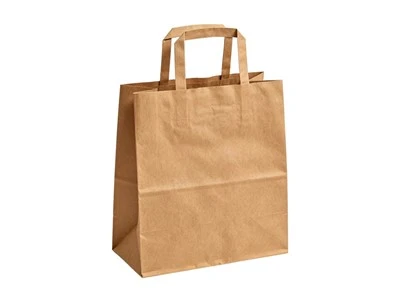
Over the years, I’ve heard every possible reason someone says a paper bag broke: it was overloaded, it got wet, it was dragged across the parking lot. But most of the time, the issue isn’t the user—it’s the bag not being designed or made to handle real-world use. Strengthening a paper bag doesn’t have to mean sacrificing sustainability, raising prices, or making a bag that feels heavy or bulky. It’s about choosing the right paper for the load, reinforcing the parts that actually take the stress, using smart design instead of extra material, and checking every batch to make sure it lives up to expectations. As a paper bag supplier, my job isn’t just to deliver a bag—it’s to give clients a product that their customers can trust, that stands up to daily use, and that still aligns with the values that make paper bags a better choice for the planet. If you’re a business owner looking for paper bags that won’t let you or your customers down, we can work with you to tailor a design that fits your needs, whether you need small bags for coffee, heavy-duty bags for hardware, or water-resistant bags for outdoor events. We’re here to collaborate, test, and deliver bags that perform, because that’s what our clients have come to expect from us. Reach out to discuss your specific needs and get a customized quote that works for your budget.
Shoe Box References:
- Technical Association of the Pulp and Paper Industry. (2021). TAPPI Test Methods for Tensile, Burst, and Puncture Strength of Paper and Paperboard.
- American Forest & Paper Association. (2022). Sustainable Packaging Guidelines for Paper-Based Products.
- European Paper Bag Manufacturers Association. (2020). Best Practices for Paper Bag Design and Durability for Commercial Use.
- Local Recycling Coordination Center. (2023). Compostable and Recyclable Surface Treatments for Paper Packaging.
- University of Georgia Extension. (2019). Design Considerations for Heavy-Duty Paper Bags for Retail and Industrial Use.
Dongguan Jinying Printing Co., Ltd.
As one of the most experienced paper bag manufacturers and suppliers in China and Vietnam, we also support custom service and OEM service. Welcome to buy bulk luxury paper bag at competitive price from our factory. If you have any enquiry about cooperation, please feel free to email us.
Address: No. 5, 1st Road, Jingshan Third Industrial Zone, Chashan Town, Dongguan City, Guangdong Province
E-mail: inquiry@dg-jinying.com
WebSite: https://www.gpspacking.com/
