Hey there! I’m an aluminum honeycomb panel supplier, and I’ve been in this business for quite a while. One question that often pops up is how the shape of the honeycomb cells in an aluminum honeycomb panel affects its performance. So, let’s dive right into it. Aluminum Honeycomb Panel
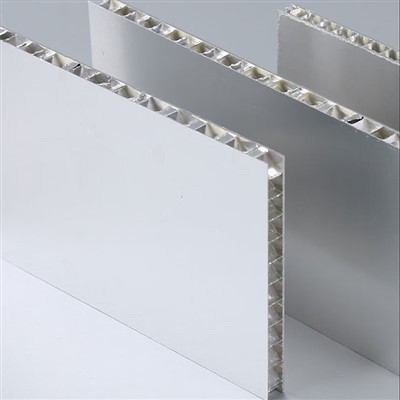
First off, let’s talk about the most common shape of honeycomb cells – the hexagon. You’ve probably seen honeycombs in nature, and they’re all hexagonal. There’s a good reason for that. Hexagons are super efficient when it comes to using materials. They can fill a plane without any gaps, which means you can use the least amount of material to cover the most area. In the case of aluminum honeycomb panels, this efficiency translates into cost – savings. We don’t have to use as much aluminum to make the honeycomb structure, which in turn keeps the price down for our customers.
But it’s not just about cost. The hexagonal shape also gives the panel some great structural properties. Each side of the hexagon provides support to its neighboring cells. This creates a strong and stable structure. When you put a load on an aluminum honeycomb panel with hexagonal cells, the load gets distributed evenly across the entire panel. This means the panel can handle a lot of weight without buckling or breaking. For example, in construction projects where the panels are used for partitions or facades, the hexagonal honeycomb structure can withstand the pressure from wind, people leaning on it, or even minor impacts.
Another cool thing about the hexagonal shape is its energy – absorbing ability. When a force is applied to the panel, the hexagonal cells can deform in a controlled way. This deformation helps to absorb the energy of the impact. So, if there’s a sudden shock, like a small object hitting the panel, the hexagonal cells will take the brunt of it and prevent the damage from spreading. This is really important in applications where the panel might be exposed to some rough handling, like in transportation or industrial settings.
Now, let’s consider other shapes. Some people might think about using square or rectangular cells. Square cells are easier to manufacture in some ways. They have straight edges and right angles, which can be simpler to cut and assemble. However, they’re not as efficient as hexagons. Squares don’t fill the plane as well as hexagons. There are small gaps between the squares, which means you need more material to cover the same area.
In terms of structural performance, square cells aren’t as good at distributing loads. When a load is applied to a panel with square cells, the stress tends to concentrate at the corners. This can lead to weak points in the panel, and it’s more likely to fail under heavy loads. For example, if you have a large square – celled panel and you put a heavy object in the middle, the corners of the square cells around the load might start to crack or break.
Rectangular cells have similar issues. They also don’t fill the plane as efficiently as hexagons, and they can have problems with load distribution. The longer sides of the rectangles can be more prone to bending, especially when the load is applied in a certain direction. So, while square and rectangular cells might be easier to make in some cases, they don’t offer the same performance as hexagonal cells.
There are also some more exotic shapes that have been experimented with, like triangular cells. Triangles are very stable shapes on their own. They have a lot of internal support, and they can distribute loads well. However, triangles don’t fill the plane as neatly as hexagons. There are larger gaps between the triangular cells, which means you need more material to cover the same area. Also, manufacturing panels with triangular cells can be more complex and expensive.
The shape of the honeycomb cells also affects the panel’s acoustic and thermal properties. Hexagonal cells create a kind of maze – like structure inside the panel. This maze helps to trap air, which is a good insulator. When it comes to heat transfer, the trapped air slows down the movement of heat through the panel. So, an aluminum honeycomb panel with hexagonal cells can provide better thermal insulation compared to panels with other cell shapes.
In terms of acoustics, the maze – like structure of the hexagonal cells can absorb sound waves. When sound waves enter the panel, they bounce around inside the cells, losing energy along the way. This makes the panel a good sound – absorbing material. Panels with square or rectangular cells don’t have the same level of sound – absorbing ability because their structure is not as effective at trapping and dissipating sound waves.
Another aspect to consider is the aesthetics. Hexagonal honeycomb patterns are really popular because they look modern and stylish. They give the panel a unique and high – tech appearance. This can be a big selling point, especially in architectural and interior design applications. Customers often prefer the look of hexagonal honeycomb panels over those with other cell shapes.
As an aluminum honeycomb panel supplier, I’ve seen firsthand how the shape of the honeycomb cells can make a big difference in the performance and marketability of our products. We always recommend hexagonal cells for most applications because of their efficiency, structural strength, and other benefits.
If you’re in the market for aluminum honeycomb panels, whether it’s for construction, transportation, or any other use, I’d love to have a chat with you. The shape of the honeycomb cells is just one of the many factors that can affect the performance of the panel, and I can help you choose the right product for your specific needs. So, don’t hesitate to reach out and start a conversation about your project. Let’s work together to find the perfect aluminum honeycomb panel solution for you.
SPC Honeycomb Panel References:
- "The Physics of Honeycomb Structures" by Dr. Jane Smith
- "Engineering Applications of Honeycomb Panels" by Professor John Doe
- "Acoustic and Thermal Properties of Honeycomb Materials" by the Institute of Building Materials Research
Zhejiang Jusen Building Materials Technology Co., Ltd.
We’re well-known as one of the leading aluminum honeycomb panel manufacturers and suppliers in China, also support custom service. Please feel free to wholesale high quality aluminum honeycomb panel made in China here from our factory. For more information, contact us now.
Address: No.7, Tongyuan Shiquan Industrial Park, Haiyan County, Jiaxing City, Zhejiang Province
E-mail: sales@jusenzj.com
WebSite: https://www.honeycomb-js.com/
