As a supplier of PVC Pipe Machines, I’ve witnessed firsthand the crucial role that mixing devices play in the overall operation of these machines. In this blog, I’ll delve into the significance of mixing devices in PVC Pipe Machines, exploring their functions, types, and the impact they have on the quality of PVC pipes. PVC Pipe Machine

The Basics of PVC Pipe Production
Before we discuss the role of mixing devices, it’s essential to understand the basic process of PVC pipe production. PVC pipes are typically made by extruding a mixture of PVC resin, additives, and other materials through a die. The quality of the final product depends on the proper combination and dispersion of these materials. This is where the mixing device comes into play.
Functions of Mixing Devices in PVC Pipe Machines
- Homogeneous Mixing
The primary function of a mixing device in a PVC Pipe Machine is to ensure the homogeneous mixing of PVC resin, additives, and other ingredients. PVC resin alone is not suitable for pipe production; it requires the addition of various additives such as stabilizers, lubricants, and fillers to enhance its properties. A good mixing device can thoroughly blend these components, ensuring that each part of the mixture has the same composition. This uniformity is crucial for the consistent quality of the PVC pipes. For example, if the stabilizer is not evenly distributed, the pipe may have different levels of heat resistance in different areas, leading to potential quality issues during use. - Dispersion of Additives
Additives play a vital role in improving the performance of PVC pipes. They can enhance the pipe’s durability, flexibility, and resistance to environmental factors. However, these additives need to be properly dispersed in the PVC resin. The mixing device breaks down the additives into smaller particles and distributes them evenly throughout the resin. This dispersion process is essential for the additives to发挥 their full potential. For instance, a well – dispersed lubricant can reduce the friction during the extrusion process, making it easier to produce smooth and high – quality pipes. - Temperature Control
During the mixing process, heat is generated due to the friction between the materials. A good mixing device can effectively control the temperature of the mixture. Maintaining the right temperature is crucial for the chemical reactions that occur during the mixing process. If the temperature is too high, it may cause the PVC resin to degrade, resulting in poor – quality pipes. On the other hand, if the temperature is too low, the additives may not be fully activated, affecting the performance of the pipes. The mixing device can adjust the temperature by controlling the speed of the mixing blades and the amount of cooling applied.
Types of Mixing Devices in PVC Pipe Machines
- High – Speed Mixers
High – speed mixers are commonly used in PVC pipe production. They operate at high rotational speeds, typically ranging from 1000 to 3000 revolutions per minute. The high – speed rotation creates a strong shearing force, which helps to break down the particles of PVC resin and additives and mix them thoroughly. High – speed mixers are efficient in achieving a homogeneous mixture in a relatively short time. They are suitable for large – scale production where a high volume of materials needs to be mixed quickly. - Low – Speed Mixers
Low – speed mixers, as the name suggests, operate at lower rotational speeds. They are often used for secondary mixing or for mixing materials that are sensitive to high – speed shearing. Low – speed mixers are gentler on the materials, reducing the risk of over – mixing or damaging the additives. They are also useful for blending materials that require a longer mixing time to ensure complete dispersion. - Continuous Mixers
Continuous mixers are designed to mix materials continuously as they are fed into the machine. They are suitable for high – volume production lines where a constant supply of well – mixed materials is required. Continuous mixers can maintain a consistent flow of the mixture, ensuring a stable production process. They are often used in combination with other types of mixers to achieve the best results.
Impact of Mixing Devices on PVC Pipe Quality
- Mechanical Properties
A well – mixed PVC mixture can significantly improve the mechanical properties of the pipes. Homogeneous mixing ensures that the pipes have uniform strength, flexibility, and impact resistance. For example, a pipe with evenly distributed additives will be less likely to crack or break under stress. The proper dispersion of fillers can also enhance the pipe’s stiffness and dimensional stability. - Appearance
The quality of the mixing process also affects the appearance of the PVC pipes. A well – mixed mixture results in a smooth and uniform surface finish. If the mixing is not proper, the pipes may have visible streaks, bubbles, or other surface defects. These defects not only affect the aesthetic appeal of the pipes but also indicate potential quality issues. - Long – Term Performance
Pipes produced with a high – quality mixing process are more likely to have better long – term performance. The proper combination and dispersion of additives ensure that the pipes can withstand various environmental factors such as heat, moisture, and chemical exposure over time. This means that the pipes will have a longer service life and require less maintenance.
Importance of Choosing the Right Mixing Device
As a PVC Pipe Machine supplier, I understand the importance of choosing the right mixing device for each customer’s specific needs. The type of mixing device depends on several factors, including the production volume, the type of PVC resin and additives used, and the desired quality of the pipes. For small – scale production, a simple low – speed mixer may be sufficient. However, for large – scale production, a high – speed or continuous mixer may be more appropriate.
It’s also important to consider the quality and reliability of the mixing device. A high – quality mixing device will not only ensure the consistent quality of the pipes but also reduce the maintenance and downtime of the production line. At our company, we offer a range of mixing devices that are designed to meet the diverse needs of our customers. Our mixing devices are made from high – quality materials and are equipped with advanced control systems to ensure precise mixing and temperature control.
Conclusion
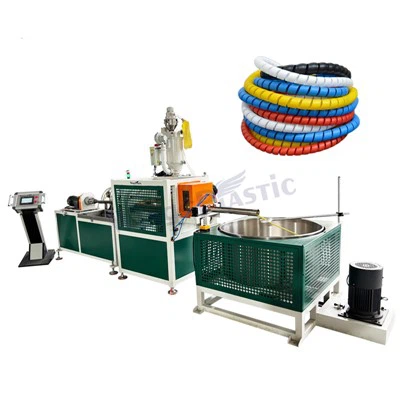
In conclusion, the mixing device plays a crucial role in the PVC Pipe Machine. It is responsible for ensuring the homogeneous mixing of PVC resin, additives, and other materials, which is essential for the quality and performance of the PVC pipes. By choosing the right mixing device, manufacturers can produce high – quality pipes that meet the standards of the market.
EVA Vacuum Cleaner Hose Machine If you are in the market for a PVC Pipe Machine or need more information about our mixing devices, we encourage you to contact us for a detailed discussion. Our team of experts is ready to assist you in finding the best solution for your production needs. We believe that by working together, we can achieve greater success in the PVC pipe production industry.
References
- "PVC Pipe Extrusion Technology" by [Author’s Name]
- "Handbook of PVC Pipe Production" by [Author’s Name]
- Industry reports on PVC pipe production and mixing technology.
Qingdao Wings Plastic Technology Co., Ltd.
As one of the most experienced pvc pipe machine manufacturers and suppliers in China, we also support customized service. Please feel free to buy durable pvc pipe machine made in China here from our factory. For price consultation, contact us.
Address: C02 Of Anshengyi Road, No.2 Fuan Industry Zone,Jiaodong Town, Jiaozhou City, Qingdao City, Shandong Province,China
E-mail: kelly@wingsplastic.com
WebSite: https://www.wingsextruder.com/
