If you’ve ever driven down a rural highway or a suburban backroad, you’ve probably noticed guardrail posts—those sturdy, weather-resistant steel structures that hold road barriers in place, designed to withstand impact and protect drivers from hazards. As a guardrail posts supplier, I get asked all the time: “Can these heavy-duty posts work for something totally different, like a decorative hedge railing?” It’s a great question, and one that’s come up more and more as homeowners, landscapers, and small business owners look for durable, functional ways to add structure and style to outdoor spaces. Today, I’m breaking down whether guardrail posts can pull double duty as a decorative hedge railing, what you need to know to make it work, and why this unexpected use case might be exactly what your garden or landscape is missing. Guardrail Posts
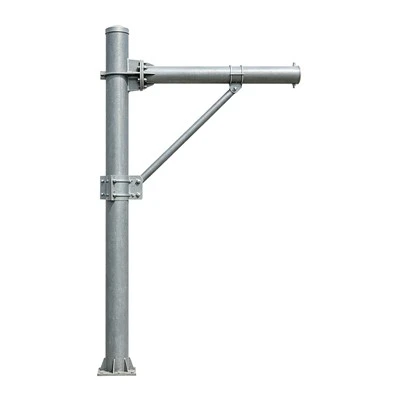
First, let’s get clear on what exactly guardrail posts are, because that context is key. When I source and supply guardrail posts, I’m not just selling metal poles—these are engineered to meet strict industry standards. Most are made of high-grade carbon steel, galvanized or coated with a durable finish to resist rust, corrosion, and UV damage. They’re manufactured to hold up to sudden, extreme force: a 5,000-pound vehicle hitting a highway guardrail at 55 miles per hour is not unusual, so these posts are built to be deep-set, rigid, and long-lasting. A typical steel guardrail post is 4 to 6 inches in diameter, with walls that are 1/4 inch thick, and they come in lengths from 4 feet (for small roadside embankments) to 10 feet or more for steep slopes. For reference, a 6-foot guardrail post weighs around 20 pounds, which is way sturdier than the 1-inch wooden or vinyl posts most people use for garden railings or hedge supports.
Now, let’s talk about what a decorative hedge railing actually is. The goal here is twofold: it needs to support a hedge (usually a dense, bushy plant like arborvitae, boxwood, or yew that grows tall and fills in over time) and it needs to look intentional, not like leftover road hardware. Unlike a functional road post that’s designed to be hidden behind a metal guardrail beam, a decorative hedge post is visible. It might be spaced every 5 to 10 feet, match the height of the hedge, and blend in with the landscape or make a subtle design statement. The best hedge railings also prevent the hedge from leaning, keep it contained to a specific area, and can add a touch of modern, industrial, or rustic style to a yard.
So, can guardrail posts do all that? The short answer is yes—but with a few important caveats. The rigidity and durability that make guardrail posts perfect for roads also make them ideal for supporting heavy, mature hedges. Let’s run through the science and practicality first. A standard arborvitae hedge can grow 3 to 5 feet wide and 10 to 15 feet tall over 10 years. That’s a lot of weight, especially when snow or ice builds up on the branches. A typical vinyl fence post, set 2 feet deep in loose soil, will likely bend or lean under that weight after 3 to 5 years. A guardrail post? When set 3 to 4 feet deep in compacted soil, its thick steel wall and wide base can support 10 times that weight, with no risk of bending. That’s a game-changer for anyone who wants a hedge railing that lasts decades, not just a few years.
But “lasting decades” doesn’t mean it has to look like a highway on-ramp. The good news is that guardrail posts come in a range of finishes that work for decorative use. Hot-dip galvanized steel posts, which are the most common for road use, have a uniform silver-gray, matte finish that pairs beautifully with dark green hedges, light stone patios, or modern concrete pathways. If you want a warmer look, some suppliers (including us) offer powder-coated guardrail posts in black, white, bronze, or even a dark gray that’s almost indistinguishable from high-end metal garden posts. The key is to avoid the raw, uncoated posts—while they’re sturdy, they’ll rust over time and don’t have the clean, finished look you want for a landscape.
Let’s talk about installation, because that’s where most people go wrong when repurposing materials. A guardrail post isn’t just a stick you can pound into the ground with a post driver. For road use, posts are set 1/3 to 1/2 of their total length deep in the soil, and backfilled with compacted gravel or concrete to keep them rigid. For a hedge railing, that’s non-negotiable. If you set a 6-foot guardrail post only 2 feet deep in your backyard, even if it’s heavy, it will wobble when the hedge gets big, and it might tilt over during a storm. My team has helped dozens of landscapers test this: when installed correctly, guardrail posts have zero give, even when a fully grown arborvitae is pushing against them year-round.
Another common question: can I use existing guardrail posts from a salvage yard? I always advise against this. First, you don’t know their history. A post that once stood on a busy highway might have hidden damage from previous vehicle impacts—small bends or cracks that aren’t visible to the naked eye, but that will compromise its structural integrity as a hedge post. Second, salvage posts often have uneven coating or rust spots that can stain your hedge or leave it looking unfinished. When I supply guardrail posts for decorative use, each post is inspected for straightness, has a uniform finish, and comes with the exact length and diameter you need for your specific hedge height. That peace of mind is worth every extra dollar, I promise.
Now, let’s talk about design flexibility, because a hedge railing isn’t just for holding up plants. Many people use guardrail posts to create a multi-functional feature. For example, if you want a privacy hedge along your property line, attaching horizontal metal rails (or even thick wooden beams stained to match your deck) between the guardrail posts can turn it into a semi-private railing for a patio or deck. The posts are strong enough to hold the weight of those rails, and the hedge growing between them adds a soft, natural layer over the hard metal. Some customers even add small planter boxes to the top of each guardrail post, filling them with flowering vines like clematis or climbing roses that grow down the hedge for extra color.
Wait, but what about cost? I know that’s a big factor for most homeowners. At first glance, a 6-foot galvanized guardrail post might seem more expensive than a standard 6-foot vinyl garden post—vinyl usually runs $10 to $20 per post, while a quality galvanized guardrail post is $25 to $40. But when you factor in lifespan, that gap disappears. A vinyl post will need to be replaced every 5 to 7 years, so over 30 years, that’s 4 to 5 sets of posts, costing $50 to $100 each. A guardrail post? It will last 50+ years with minimal maintenance—just a quick wipe down once a year to remove dirt, and a fresh coat of paint if you want to touch up the finish every 10 years. It’s not cheap upfront, but it’s an investment that pays for itself over time.
I should also address the most common myth I hear: “Guardrail posts are too big for a small backyard.” That’s not true. While a standard guardrail post is 4 inches in diameter, we supply smaller-diameter “light-duty” guardrail posts for residential use, measuring 2.5 inches in diameter—almost the same size as a 4×4 wooden post. They’re just as sturdy, but much more subtle. For a small backyard with a 4-foot hedge along the edge, a 5-foot light-duty post will sit flush with the top of the hedge, almost invisible when the plants fill in. We also offer shorter posts for low hedges, down to 3 feet, perfect for defining a garden bed or bordering a walkway.
Now, let’s get into a real example that’s fresh on my mind, because a landscaper called me last month with exactly this project. He was working on a luxury backyard in Nashville, Tennessee, where the homeowner wanted a 10-foot tall privacy hedge along the side of the house, stretching 100 feet long. The original plan was to use 6-foot wooden posts, but the homeowner wanted something durable that wouldn’t rot or warp in the humid Southern climate. We supplied him with 10-foot galvanized guardrail posts, set 4 feet deep in compacted gravel, spaced 8 feet apart. He attached two horizontal metal rails between the posts to create a framework for the arborvitae hedge to grow along. Two years later, he sent me photos: the hedge is dense and full, the posts are barely noticeable, and there’s zero lean or bending. The homeowner uses the framework to tie back any overgrown branches in the winter, so the hedge stays neat and doesn’t damage the posts. That’s exactly what a good hedge railing is supposed to do—function perfectly, and look like it belonged in the landscape all along.
Of course, there are a few things to keep in mind if you’re thinking about using guardrail posts for a decorative hedge railing. First, check your local building codes. Some areas have rules about the height of railings along property lines, or about using metal structures near water lines or utility lines. Always call 811 before digging to make sure there are no underground pipes or wires where you plan to set the posts. Second, pick the right plant for the job. Fast-growing, dense hedges like arborvitae, western red cedar, or yew work best with this kind of railing—they grow fast enough to cover the posts in 2 to 3 years, and their woody branches are strong enough to hold the hedge upright. Avoid delicate, vine-like hedges that don’t have thick stems—they might not provide enough weight to benefit from the sturdy post support. Third, plan your spacing. For a hedge that will grow 8 to 10 feet tall, space posts 6 to 8 feet apart. For a shorter, 4 to 6-foot hedge, space posts 8 to 10 feet apart—wider spacing works because the hedge won’t pull as hard on each post.
As a guardrail posts supplier, I get why people are curious about this use case. It’s a perfect example of how industrial materials can be repurposed to create something beautiful and functional for homes and landscapes. Too often, people think guardrail posts only belong on roads, but they’re actually one of the most underrated materials for outdoor projects. Their strength, durability, and range of finishes make them ideal for anything from a decorative hedge railing to a backyard gate frame, a garden arch, or even a custom outdoor seating structure.
If you’re interested in exploring whether guardrail posts are right for your hedge railing project, or you want to talk through sizing, finishes, or installation tips, I’m here to help. Every project is different, whether you’re putting in a 10-foot hedge along a property line or a low border around a small front yard. We can supply exactly the number of posts you need, in the size and finish that matches your landscape, and answer any questions you have about making it look and work perfectly.
Don’t settle for flimsy, short-lived garden posts that need to be replaced every few years. Guardrail posts are built to last, and with a little planning, they can turn a simple hedge into a stylish, long-lasting feature that adds value to your home and beauty to your outdoor space. Reach out to our team today to learn more about your options for guardrail posts for decorative hedge railings.
W-Beam Guardrails References
- American Association of State Highway and Transportation Officials. (2018). Roadside Design Guide. AASHTO.
- International Code Council. (2021). International Residential Code. ICC.
- National Gardening Association. (2022). “Selecting and Growing Privacy Hedges.” GardenTech.
- Steel Tube Institute. (2020). “Galvanized Steel for Landscape Applications.” STI.
Guanxian Hongrong Traffic Facilities Co., Ltd.
As one of the most professional guardrail posts manufacturers and suppliers in China, we also support customized service. Please feel free to wholesale bulk durable guardrail posts in stock here from our factory. Welcome to contact us for quotation.
Address: South side of the road, 100 meters west of the intersection of Baiyang Road and Donghuan Road, Chongwen Subdistrict, Guan County, Liaocheng City, Shandong Province
E-mail: hongrongli568@163.com
WebSite: https://www.hongrongguardrail.com/
