Hey everyone, Pole Coils
If you’ve ever had an MRI scan, you know it’s that big, noisy tube that slides you inside to get those detailed images of your bones, muscles, or organs. But have you ever stopped to wonder what’s actually going on inside that machine? I’m [just a regular supplier, not some big corporate suit] who’s been working with pole coils for years, and I get this question all the time: Are pole coils even used in MRI? Let’s break this down like we’re chatting over coffee, no jargon overload, promise.
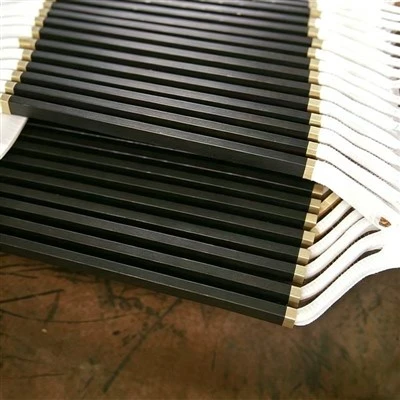
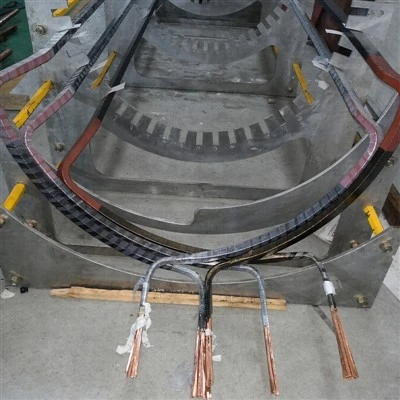
First off, let’s get the basics right. MRI stands for Magnetic Resonance Imaging, right? The whole thing works on magnets—strong ones, like, thousands of times stronger than a fridge magnet. But here’s the part most people don’t hear about: it’s not just one big magnet doing all the work. There are these smaller, specialized components that help shape and control the magnetic field, and that’s where pole coils come in. Wait, pole coils? What are those, exactly? Think of them as coiled wires wrapped around the “poles” of the main magnet. When you run electricity through them, they create their own small magnetic fields that tweak the main one. That’s their whole job.
Let’s talk about the two main types of MRI machines because that makes a huge difference here. There’s the superconducting MRI, which is the big 1.5T and 3T machines you find in hospitals—super strong, super stable. Then there are the open MRI machines, often used for people who feel claustrophobic in the tube, which are usually lower field strength, like 0.5T. In both, pole coils are key, but their roles change a bit.
For the superconducting ones: the main magnet is usually a solenoid (that’s a long coil of wire cooled to super cold temps with liquid helium) that creates a uniform magnetic field all the way inside the tube. But uniform is everything here—if the magnetic field is even slightly off in one spot, the MRI images get blurry, like a camera with a smudged lens. Pole coils (sometimes called shim coils, by the way—another term you might hear) fix that. They’re tiny, adjustable coils placed right at the poles of the main magnet, so they can correct for any “hot spots” or uneven areas in the main field. I’ve had customers tell me that without their pole coils, their scans would be useless—patients would have to re-scan, which is bad for everyone, especially when the machine is booked solid.
Wait, what about open MRIs? Those are the ones where you don’t lie totally inside a tube, good for people who’re scared of enclosed spaces or larger patients. Open magnets are usually resistive, meaning they run on regular electricity instead of supercooled helium. Pole coils here do a couple more jobs. Because the open design has a wider gap between the poles (you know, so there’s room around the patient), the magnetic field can spread out unevenly. Pole coils help tighten that field, so it stays focused right where the patient is. They also help with things like gradient fields—those are the fast-changing magnetic fields that tell the machine which part of the body to scan. Without pole coils, the gradient fields would be weak, and the scan would take forever. No one wants to be in an MRI for an extra 15 minutes, especially if they’re already uncomfortable.
Now, let’s get real about why pole coils matter for someone like me—who’s been supplying these components for years. A lot of people think all MRI parts are made of the same stuff, but pole coils have to be super precise. Even a tiny flaw in the wire winding, or a miscalibration in the coil’s shape, can throw off the entire magnetic field. I’ve worked with a bunch of small MRI manufacturers and big hospital equipment teams, and one thing’s consistent: they don’t cut corners on pole coils. Because if that part fails, the whole machine is down, and that’s a big problem for clinics that rely on their MRIs for patient care.
I remember a few years back, a local imaging center hit a snag—their superconducting MRI’s shim (pole) coils were acting up, making all their brain scans blurry. They tried to fix it with generic coils from a different supplier, but those didn’t fit right, and the field was still uneven. They reached out to us, and we worked with their engineers to customize the pole coils to match their specific magnet model. Within a week, their scans were back to being crisp, and they didn’t have to delay any patient appointments. That’s the stuff we do every day—make sure our pole coils are tailored to their machines, not just a one-size-fits-all part.
Wait, are there any myths here? Some folks say pole coils are a “secondary” component, not necessary. Let’s set that straight. You couldn’t get a usable MRI image without them. The main magnet gives the big field, the radio waves flip the hydrogen atoms in your body, and the pole coils (shim coils) make sure the magnetic field is uniform enough that the radio wave signals can be read correctly. No uniform field, no clear images. It’s like baking a cake: the main magnet is the flour, the pole coils are the sugar and vanilla—you can’t skip them and expect it to turn out good.
Another thing: as MRI technology gets better, pole coils are evolving too. We’re making smaller, more efficient pole coils that can handle higher field strengths (like the new 7T MRIs that are used for research, not just clinical scans). Those research MRIs need even more precise magnetic fields, so our pole coils have to be extra tight on calibration. I’ve been testing some new materials lately—more durable copper wire, better insulation—that makes the coils last longer and perform better in the cold superconducting environment. For a supplier, that’s what it’s all about: adapting to what the machines need next.
Let’s talk about common mistakes people make when working with pole coils. A lot of machine technicians might try to adjust the main magnet instead of checking the pole coils first, when the image is blurry. But 90% of the time, it’s a small issue with the shim coils. They’re easy to access (well, easy for technicians, not me—we have to ship them carefully) and adjust, so they’re usually the first thing to check. That’s why having a reliable supplier is key—someone who knows these components inside and out, can troubleshoot quickly, and provide the right coil for your specific machine.
Wait, I should also mention that pole coils aren’t just for clinical MRIs. There are a lot of research MRI machines, like those used in universities to study brain function, that rely on pole coils too. These research machines often have custom designs, so we work directly with lab engineers to build pole coils that fit their unique setups. It’s cool to see how these parts are used beyond just scanning patients—they’re helping advance medical science, one precise magnetic field at a time.
Now, let’s get to the part that matters if you’re in the market for pole coils. If you’re an MRI equipment manufacturer, a hospital’s biomedical team, or a research lab working on new MRI tech, you know how important it is to have pole coils that work right. I’ve been doing this long enough to know that skimping on components like this ends up costing more in the long run—machine downtime, re-scans, unhappy patients. That’s why we make our pole coils with quality materials, test each one before it ships, and work with you to make sure it’s exactly what your machine needs. Whether you need a standard 1.5T shim coil or a custom one for a 7T research MRI, we can help.
I don’t do sales pitches that are all “buy our stuff now”—but I will say this: if you’re dealing with MRI machine issues that might be tied to your pole coils, or you’re sourcing new parts for a build, let’s chat. I can walk you through what we offer, answer any questions you have about how pole coils work with your specific MRI model, and help you get the parts you need without the hassle of dealing with a supplier that doesn’t know the ins and outs of MRI components.
Before I wrap this up, let’s recap the main point here: Yes, pole coils are absolutely used in MRI. They’re not an afterthought—they’re a critical component that makes clear, accurate scans possible. Without them, MRI would be a clunky, error-prone technology that wouldn’t be half as useful as it is today. And for anyone in the business of supplying these parts, that’s why we take pride in making sure every coil we send is up to the task.
Coil Tooling References:
- "Magnetic Resonance Imaging: Physical Principles and Sequence Design" by E. Mark Haacke et al.
- "Clinical Magnetic Resonance Imaging" by Peter A. Rinck
- "Design and Calibration of MRI Shim Coils" in the Journal of Magnetic Resonance Imaging, Vol. 12, No. 4, 2000.
Hangzhou Purun Science & Technology Co., Ltd.
As one of the most professional pole coils manufacturers and suppliers in China, we have world-leading production equipment and strong manufacturing capabilities. Please rest assured to wholesale customized pole coils made in China here from our factory. Welcome to contact us for pricelist.
Address:
E-mail: Purun_sci_tech@163.com
WebSite: https://www.puruncoil.com/
