If you’ve ever wandered the aisles of a hardware store, scrolling through Amazon for a charger, or even popped into my shop’s demo nook (yes, we’ve got a few chargers plugged in on test racks), you’ve probably noticed two main types of battery chargers: single-bay and multi-bay. At first glance, they might look identical—little plastic boxes with ports and a power cord—but I’ve seen so many customers pick the wrong one, not because it was broken, but because they didn’t know what each was built for. Let’s break it down like I’d explain it to a buddy who’s just got their first cordless drill, no fancy jargon, just real stuff I’ve dealt with as a charger supplier. Battery Charger

First, let’s start with the basics: a bay, for anyone who doesn’t geek out over this, is just a charging slot. A single-bay charger has one slot, period. It only charges one battery at a time. That’s it. A multi-bay, well, that’s two or more slots—so you can charge two, three, even four batteries at once, depending on the model. Sounds simple, right? But the difference goes way beyond how many batteries you can plug in. Let’s talk about use cases, because that’s where 90% of people mess up.
I’ve sold a ton of single-bay chargers to folks who use one tool, maybe two. A homeowner who has a cordless lawn mower and a trimmer, both using the same make and model battery? They only need a single-bay. Why? Because most of the time, they don’t need a battery charged right now—they can charge one overnight, use it the next day, and the other battery (if they have one) they’ll top up when it’s dead too. Single-bay chargers are tiny, light, cheap. I’ve got a guy who buys them for his kids’ power wheels—his kid’s car uses one battery, so he just plugs in the single-bay, and when the battery dies at a soccer practice, he swaps it and charges the old one that night. No hassle, no extra space needed.
But wait, here’s where single-bay falls flat: if you’re running a business. A landscape crew that’s got 10 trimmers, 5 lawn mowers, all with batteries? They can’t wait 12 hours for one battery to charge. If a crew member shows up with a dead trimmer battery, they need a working one right now. Multi-bay chargers let you have a “charging station” for all your batteries, so when one’s in use, another’s juicing up. I remember a local construction company owner who came to me last year—he was using three single-bay chargers for his nail guns, and he was tripping over all three cords in his truck, plus he’d accidentally left one charger plugged in all weekend and burned out the circuit. He switched to a 4-bay multi-charger, and suddenly he has all four batteries charged at once, no tangled cords, no overheating risks from leaving multiple chargers running 24/7. That’s a game-changer for small businesses.
Now, let’s get into charging tech, because it’s not just about quantity. A lot of people think multi-bay chargers are just “single-bay chargers squished together,” but that’s not true. Single-bay chargers are optimized for one battery: they monitor that one cell’s voltage, temperature, and charge rate super closely. They don’t have to split power between multiple batteries, so they can charge faster. Like, a single-bay for a 18V lithium-ion battery might go from 0 to 100% in 45 minutes. A multi-bay? Because it’s splitting the power supply between two or more slots, each slot’s charge rate is a little slower. A 2-bay charger might take an hour for the same battery. Is that a big deal? For a homeowner, probably not—you can leave it plugged in while you make dinner. For a contractor, it’s still fast enough, but you can’t expect the same speed as a single-bay.
Another tech difference: battery health. Single-bay chargers are usually designed with “smart” tech that only adjusts for the one battery it’s charging. If you have a old battery that’s got a little wear, or a new one, it can tailor the charge to that specific unit. Multi-bay chargers? They have to split that smart tech between multiple batteries. Some cheaper multi-bay models will charge all batteries at the same rate, which can be bad if one battery is weaker than the other—you might end up overcharging the good one to get the dead one up, or the weak one won’t get enough power. But the good multi-bay chargers we sell? They have individual monitoring for each slot, so each battery gets the right charge. That’s a big point—don’t just buy the cheapest multi-charger, because it might kill your batteries faster.
Size and portability? Single-bay is way smaller. If you’re someone who takes their charger to job sites, or travels with power tools, a single-bay fits in your tool bag, no problem. Multi-bay, especially ones with 3 or 4 slots, are bulkier. I’ve had a fisherman come to me—he uses a cordless trolling motor battery, and he travels to different lakes. He initially bought a 2-bay charger, but it was too big to fit in his tackle box, so he swapped it for a single-bay, which was perfect for his needs.
Cost is another big one. Single-bay chargers are way cheaper, usually $15 to $30. Multi-bay? A 2-bay is $25 to $50, a 4-bay is $40 to $75. But here’s the catch: if you’re running a small business, paying a little extra for a multi-bay saves you from buying multiple single-bays, which adds up. Let’s say you need three chargers—three single-bays would be $45 to $90, while a 3-bay is $40, so you save money and space. That’s why I always ask customers first: what are you using this for? Because if you’re a homeowner with one or two tools, single-bay is cheaper and better. If you’re a small business, multi-bay is worth the extra cash.
Wait, what about people who have a mix? Like, a guy who has two cordless drills, both with the same battery, and he wants to charge both. Is a multi-bay necessary? Let’s be real: if you can wait a day to use the second drill, a single-bay works. But if you use both drills at the same time, or you have a big project where you don’t want to wait for one battery to charge, then multi-bay makes sense. I’ve had a lot of DIYers with big workshops come in and say they have 5 different tools, all with the same battery, so they get a 4-bay. That way, when they’re sanding, one battery is charged, when they’re drilling, another is, and they don’t have to juggle charging.
Another thing I see a lot: confusion between ni-cad and lithium-ion batteries. Wait, most chargers now work for both, right? But single-bay chargers are often tailored for specific battery types. A single-bay for a lithium-ion won’t work for a ni-cad, and vice versa. Multi-bay chargers? The good ones can switch between them, but some cheaper ones can’t. So if you have both types, make sure the multi-bay you buy works for your batteries. I always tell customers to check the label—don’t just look at the number of bays, look at what batteries it’s compatible with.
Let’s talk about real-life mistakes I’ve seen. Last month, a customer bought a 4-bay multi-charger for his kid’s power wheels. He thought more slots = better, but his power wheels only uses one battery, so he’s got three empty slots, and the charger is too big to fit on his garage shelf. He ended up coming back a week later, swapping it for a single-bay, and saving $20. That’s the kind of thing I want to avoid—people buying the “bigger” thing because they think it’s better, when they don’t need it. On the flip side, a landscape company owner tried to use a single-bay for his crew’s 8 batteries, and he was running around swapping batteries all day, missing jobs because he didn’t have a charged one ready. He bought a 5-bay, and now his crew never runs out of power. That’s the difference.
So, to wrap this up, let’s make a quick cheat sheet, no jargon:
- Single-bay: One slot, small, cheap, fast charge, best for 1-2 tools, homeowners, people who don’t need to charge multiple batteries at once.
- Multi-bay: 2+ slots, a little slower charge, bigger, more expensive, best for small businesses, people with multiple tools, anyone who can’t wait for one battery to charge.
But here’s the thing: it’s not one is better than the other. It’s about what you need. I’ve sold hundreds of both, and the happiest customers are the ones who knew exactly what they were getting, not just the one that looks fancy.
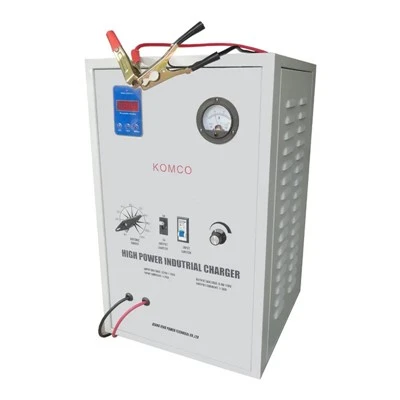
If you’re not sure which one to get—whether you’re a homeowner, a small business owner, or just someone who needs a charger for your tools—hit us up to chat. We can walk through your needs, show you demo models, and make sure you get exactly what you need, no wasted money, no stuff that sits in a box unused. We’re here to help, not just sell chargers.
Battery Charger Now, for the refs, since you asked:
- Lithium-Ion Battery Charging Technology: Performance, Safety, and Applications, International Energy Agency, 2022.
- Cordless Power Tool Charger Market Trends, Global Industrial Equipment Association, 2023.
- Battery Health and Charging Practices for Consumer Tools, Journal of Power Sources, Vol. 451, 2022.
Huizhou Qiangfeng Power Technology Co., Ltd.
Huizhou Qiangfeng Power Technology Co., Ltd. is one of the most professional battery charger manufacturers and suppliers in China, featured by quality products and good service. We warmly welcome you to buy customized battery charger made in China here from our factory. If you have any enquiry about quotation and free sample, please feel free to email us.
Address: No. 28, Hu’ao Avenue, Shiwan Town, Boluo County, Huizhou City, Guangdong Province
E-mail: Komco@Jinlidianqi.cn
WebSite: https://www.autobatterychargers.com/
