Hey there, it’s Jake from your go-to inline pump supplier—been helping homeowners across the region size the right inline pumps for their houses for the past 12 years, and if I had a dollar for every time I heard, “Wait, my old pump worked fine so why would I need a new size?” I’d probably be sipping iced coffee on a beach right now instead of typing this. But here’s the truth: sizing an inline pump isn’t just about swapping out a old unit for the same number on the label. It’s about matching your pump to your house’s actual water needs, or you’ll end up with weak showers mid-laundry, high utility bills, or a pump that burns out way too fast. Let’s break this down like we chat on a porch—no fancy engineering jargon that makes your head spin. Inline Pump
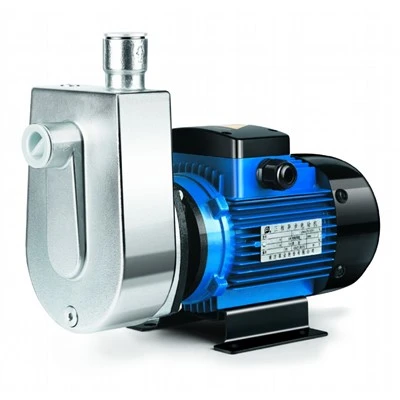
First, let’s get one thing straight: inline pumps aren’t the same as those sump pumps in your basement, or the jet pumps out by your well. Inline pumps are installed directly in your home’s water main, right where the line comes into the house, and they boost pressure for everything—showers, dishwashers, sprinklers, the whole nine yards. That means they have to handle all the simultaneous water use in your house, which is way more complicated than just testing one faucet. When sizing, we use two key numbers: flow rate (measured in gallons per minute, GPM) and pressure (measured in pounds per square inch, PSI). You can’t pick a pump without both, but most homeowners focus on pressure and forget flow rate—and that’s where things go wrong.
Let’s start with flow rate, because that’s the foundation. Flow rate is how much water your house uses at peak times. The EPA says a standard shower head uses 2.5 GPM, a dishwasher uses about 1.5 GPM, and a clothes washer uses around 3 GPM. If you have a family of four, and everyone’s taking a shower at 7 PM, running the dishwasher, and the husband’s watering the lawn with sprinklers—you need to add all those up, right? Wait, not exactly. Because not every fixture runs at full flow at the exact same time, but you need to account for the maximum possible use. A general rule of thumb for most suburban homes: if you have a 3-4 bedroom house with 2-3 bathrooms, you’re looking at a peak flow rate of 12-18 GPM. If you have a smaller 1-2 bedroom condo or house, that drops to 6-12 GPM. Larger homes with 5+ bedrooms, or houses with a lot of outdoor sprinklers, can go up to 20+ GPM. That’s non-negotiable—under-sizing here means you’ll have a trickle when everyone’s using water.
Now pressure, which is the other half of the equation. Most municipal water systems deliver between 40-60 PSI, and that’s the sweet spot for residential use. If your water pressure is below 40 PSI, your showers will feel like a drizzle, your dishwasher might not fill right, and your sprinklers will only reach half the yard. Above 80 PSI, you’re at risk of damaging pipes, fixtures, and even your water heater—not to mention high water bills from leaks. The inline pump’s job is to boost pressure to that ideal range when needed, but it has to do that while delivering your required flow rate. That’s called the pump’s “performance curve,” and it’s the most important spec to check when shopping.
Here’s a quick story to illustrate why this matters: Last month, I got a call from a couple named Mike and Lisa in Maplewood. They had a 3-bedroom house, two bathrooms, and their old inline pump was ½ HP. They said their showers were terrible, so they bought a bigger ¾ HP pump on Amazon thinking that would fix it. Turns out, the new pump could boost pressure great—but at their required 14 GPM peak flow, it only delivered a few PSI, so their showers were still weak. I went out, ran their numbers: they needed 15 GPM at 50 PSI, and the right size for their house was a 1 HP inline pump with a performance curve that matched exactly that. We installed it, and now they have a shower strong enough to wake up even the grumpiest teenager, and their utility bill only went up $8 a month—way cheaper than replacing the pump a year later when the wrong size burned out.
So how do you calculate your own needs without hiring a plumber? Let’s walk through the steps I give every customer. First, figure out your home’s flow rate. Grab a timer, turn on your kitchen sink all the way, and let it fill a 5-gallon bucket. Time how long it takes—if it fills in 1 minute, that’s 5 GPM. If it takes 2 minutes, that’s 2.5 GPM. Do this for your shower, dishwasher, and clothes washer, then add up the maximum you’d use at the same time. For example: 2 showers (2.5 GPM each = 5), dishwasher (1.5), clothes washer (3), outdoor faucet (4) = total 13.5 GPM. That’s a 3-bedroom house, so 12-18 GPM is right on target.
Next, check your current water pressure. You can buy a pressure gauge at any hardware store for $10—just screw it onto an outside faucet, turn it on all the way, and read the number. If it’s below 40 PSI, that’s when you need a pump to boost it. If it’s above 60 PSI, you might not even need an inline pump—you might just need a pressure regulator. Here’s the key point: when looking at pump specs, don’t just go by HP. A 1 HP pump from a reliable supplier will deliver different flow and pressure than a cheap no-name 1 HP pump from a big-box store. Always match the pump’s GPM at your required pressure to your needs. For example, if you need 15 GPM at 50 PSI, look for a pump that’s rated to hit those numbers—not just a pump that says “1 HP” somewhere on the box.
Now, special cases that change the size. If you have a well, your well pump is different from an inline pump, but if your well water pressure is low, an inline pump can be a great add-on. Just make sure your well can deliver enough flow to feed the inline pump—if your well only puts out 10 GPM, a pump rated for 20 GPM is useless. Another special case: if you have a hot water recirculation system, or a whole-house sprinkler system, that adds to your peak flow. A sprinkler system can use 10-15 GPM on its own, so you’ll need to add that to your indoor use to get the right size. I had a customer with a 4-bedroom house and a large front/back yard sprinkler system—his total peak flow was 22 GPM, so we sized him up to a 1.5 HP inline pump, and now his sprinklers cover every inch, no dry spots.
What happens if you get the size wrong? Let’s go over the two mistakes I see most. First, under-sizing: you get a pump that can only deliver 10 GPM when you need 15. That means when peak use hits, the pump strains to keep up, leading to weak pressure, inconsistent water flow, and the pump working harder than it needs to, which shortens its lifespan by years. Second, over-sizing: you buy a pump that’s way bigger than your needs. Not only is this a waste of money (you’ll pay 20-30% more for a larger pump than you need), but it can cause water hammer—those loud banging noises in your pipes when a fixture shuts off. Water hammer can damage your pipes, water heater, and appliances, and over-sized pumps are one of the most common causes. I’ve had customers come to us who bought a 2 HP pump for their tiny 2-bedroom house, and within six months, their pipes were leaking from water hammer. We swapped it for the right size, and the problem went away.
Also, don’t forget about pipe size as a secondary factor. If your home has old, small pipes (less than ¾ inch diameter), even a correctly sized pump won’t deliver the flow you need. Pipes can restrict flow, so if you have old galvanized pipes that are corroded, you might need to replace them before installing a larger pump, or adjust your pump size to account for the pipe restriction. That’s why it’s always a good idea to have a supplier or plumber check your pipes when sizing, but if you’re doing it on your own, make sure to note any old pipe issues.
Wait, I should mention one more thing: efficiency. Inline pumps use electricity, so a pump sized correctly for your home is way more efficient than an over-sized one. Modern variable-speed inline pumps are even better—they adjust their flow and pressure based on how much water you’re using, so they only use as much energy as needed. For a family of four, a variable-speed pump can save $100-$150 a year on utility bills compared to a fixed-speed pump that’s the wrong size. That’s a big deal over the lifespan of a pump, which is usually 8-15 years.
Let’s summarize the quick steps to size your inline pump: 1. Calculate your peak flow rate by adding up the maximum use of all fixtures at the same time. 2. Test your current water pressure with a cheap gauge. 3. Match those numbers to a pump’s performance curve, not just HP or a random label. 4. Account for special cases like sprinkler systems, wells, or old pipes.
At the end of the day, sizing an inline pump is all about matching your home’s actual needs to the pump’s actual specs. You don’t need the biggest pump on the market, you need the right one for your house. If you’re not sure about your numbers, or you want to make sure you get the right size, reach out to us. We’ve helped thousands of homeowners get the right inline pump, and we don’t push over-sized pumps just to make a sale—we give you honest advice based on your specific home, family, and needs. Don’t waste money on a pump that doesn’t work, or deal with weak showers and high bills for years. Let’s talk, and we’ll get you sized right.
Self-priming Pump Reference
- U.S. Environmental Protection Agency. (2023). Water Efficiency Factsheet: Residential Fixture Use. Retrieved from environmental protection agency residential water resources publications
- Association of Home Appliance Manufacturers. (2022). Residential Water Pump Sizing Guide. Retrieved from home appliance industry technical and sizing documentation resources
- Plumbing-Heating-Cooling Contractors Association. (2021). Inline Pump Specification and Sizing Best Practices for Residential Applications. Retrieved from plumbing industry professional standards publications
Hangzhou Nanfang Ouke Pump Industry Co., Ltd.
As one of the most experienced inline pump manufacturers in China, we have world-leading production equipment and strong manufacturing capabilities. Please feel free to wholesale bulk customized inline pump from our factory. Welcome to contact us for pricelist.
Address: No.46, Renhe Subdistrict, Yuhang District, Hangzhou City
E-mail: Gy656169@outlook.com
WebSite: https://www.oukegroup.com/
