If you’ve ever worked with carbon fiber composite plates, chances are you already know why they’re our most requested product at the shop: they’re lightweight, stiff, and hold up way better than steel or aluminum for dozens of applications, from drone frames to automotive chassis parts to custom robotics components. But over the past few months, I’ve gotten a handful of emails from engineers, fabricators, and even small business owners asking the same tough question that stumps so many people in our industry: Are carbon fiber composite plates fire-resistant? Carbon Fiber Composite Plate

I get it, too. When specs call for any material that won’t melt, char, or warp in a heat event, you can’t afford vague answers. Last month, I had a customer come to us panicking because a prototype part they ordered from another supplier failed a simple candle test—left black, bubbled, and soft enough to bend with a finger after just 10 minutes of being held a few inches from a flame. That’s not the performance anyone wants for a part that’s supposed to hold up to heat, so I wanted to break this down clearly, not with lab jargon, but with what I’ve learned over 8 years working hands-on with these materials, testing them for customers, and answering questions week in and week out.
First, let’s get one thing straight: carbon fiber itself is not a plastic, and it’s not a metal. It’s a high-strength fiber made from tightly packed carbon atoms, arranged in thin, thread-like strands. Those strands don’t melt, don’t ignite easily, and can hold their structural integrity at temperatures up to around 3000°C (5432°F)—hot enough to melt steel, for reference. The problem is, almost all carbon fiber composite plates people buy aren’t made of pure carbon fiber strands. They’re held together with a resin matrix, the glue that binds the fibers into a solid, rigid plate. That resin is the part that makes or breaks fire performance.
Not all resins are the same, and that’s the biggest mistake people make when they ask about fire resistance: they assume every carbon fiber plate is made with the same stuff. Let’s talk about the most common resins, and how they behave when exposed to heat. The first and cheapest one, which is used for 70% of the generic carbon fiber plates you’ll find online from big-box suppliers, is epoxy resin—standard, general-purpose epoxy. That’s the stuff that starts to soften and break down at around 120°C (248°F). Leave it near a small flame, and it won’t catch fire right away, but it will start to melt, bubble, and give off toxic fumes, and once it breaks down, the entire plate loses its stiffness and strength. That’s exactly what happened to my customer’s prototype part.
But here’s where it gets interesting: we don’t stock that generic epoxy stuff. For the past 5 years, we’ve focused on three resin types that are better suited for heat-intensive applications, and that’s what most of our repeat customers come back for, because they’ve tested them in real-world conditions. The first is high-temperature epoxy, modified with additives that push its softening point (called the glass transition temperature, or Tg) way up. Our standard high-temp epoxy plate has a Tg of 180°C (356°F)—that means it won’t soften or warp until it’s exposed to temperatures above that, and it can handle short, intermittent exposures to temperatures up to 250°C (482°F) without major degradation. That’s enough to handle, say, being mounted near the exhaust manifold of a small ATV, or used as a heat shield component in a small robotics arm, as long as it’s not sitting in a steady flame for hours.
The second resin we use is phenolic resin, and this is where fire performance really jumps up. Phenolic resins have been used in aerospace and military applications for decades because they’re naturally fire-resistant, no extra additives needed. They don’t give off toxic fumes when heated, they don’t melt, and they have a Tg of around 230°C (446°F), with short-term heat resistance up to 350°C (662°F). When exposed to an open flame, phenolic resin actually chars on the surface, creating a protective layer that insulates the inner carbon fiber strands from further heat. That char layer is key—It slows the spread of fire, and keeps the rest of the plate structurally intact. I’ve tested our phenolic carbon fiber plate by holding it directly over a propane torch for 2 minutes, and while the surface did turn black from charring, the plate was still rigid, didn’t bend, and didn’t catch fire. Compare that to the generic epoxy plate I tested next, which started bubbling and melting within 45 seconds of being over the same torch.
Third, we also carry a polyimide resin option, which is our most fire-resistant plate. Polyimide is the gold standard for extreme heat applications—think aerospace components, rocket parts, industrial furnaces, or military equipment that needs to pass strict fire safety tests like UL 94 V-0. Its Tg is over 250°C (482°F), it can handle continuous exposure to temperatures up to 300°C (572°F), and it’s self-extinguishing. If you hold a flame to a polyimide carbon fiber plate, it will char at the point of contact, but once you remove the flame, the char layer stops the rest of the plate from burning. We’ve had customers use these for parts on commercial drone engines, where they need to withstand the heat of a running motor, and they’ve passed flame resistance tests for custom industrial equipment that requires parts to meet OSHA fire safety standards.
But wait—there’s a catch, and it’s one I have to be honest about, because I’d rather tell you the full truth than overpromise. No carbon fiber composite plate, even the most fire-resistant one, is going to survive being trapped in a steady 1000°C fire for an hour. The carbon fiber itself will start to oxidize at temperatures above 400°C (752°F), so if you’re in a situation where the part will be exposed to direct, prolonged extreme heat, no carbon fiber plate is the right choice. We always tell customers to match the fire performance to their application: if you need a part that won’t soften when near a welding torch, high-temp epoxy works. If you need a heat shield that will stop fire from spreading to other components, phenolic is perfect. If you need to meet strict fire safety codes for consumer products or aerospace, go with polyimide.
Another common question we get is about smoke and toxicity. A lot of people assume any carbon fiber material gives off toxic fumes when burned, and that’s partially true—but it depends on the resin. Generic epoxy gives off thick, black, toxic fumes when heated or burned, which is a big reason it’s not used in aircraft or public building components. Phenolic and polyimide resins, on the other hand, give off far less smoke, and their fumes are not as toxic. We’ve had a few customers working on indoor robotics projects, where fire safety codes require parts to have low smoke and toxicity, and our phenolic plates have passed those tests with no issues. That’s a big plus that a lot of generic carbon fiber suppliers don’t mention.
I also want to clarify the difference between fire-resistant and flame-retardant, because people mix these terms up all the time. Flame-retardant materials are treated with chemicals to stop them from burning, and those chemicals can leach over time, especially if the part is exposed to UV light or moisture. Fire-resistant materials, like our high-temp, phenolic, and polyimide plates, get their performance from the resin itself, not from surface treatments or coatings. That means the fire resistance is permanent, it doesn’t wear off, and it doesn’t add any harmful chemicals that could leach into food, electronics, or other sensitive components.
Let me give you a real example of how this plays out in a customer’s project. Last year, a custom oven manufacturer came to us needing plates for the interior shelves of a commercial bakery oven. The oven operates at 220°C (428°F) for 12 hours a day, and the parts had to hold up to that heat without warping, and if a small crumb caught fire inside the oven, the shelves couldn’t catch fire or melt. They originally bought cheap carbon fiber plates from a big online supplier, and after 3 months, the shelves were soft, warped, and starting to char. We sent them our high-temp epoxy plates, and a year later, they still look like new, no warping, no charring, and they’ve handled occasional small crumb fires without issue. That’s the kind of performance that matters, not lab numbers on a spec sheet.
Another example: a drone parts designer we work with needed a frame plate for a commercial agricultural drone, which operates near hot engine parts and is used in fields where grass fires are a rare but possible risk. Generic epoxy plates would melt if they got too close to a small grass fire, so we recommended our phenolic carbon fiber plates. The designer tested them by holding a lit match to the frame for 15 seconds, and when he removed the match, the only mark was a small char spot that rubbed right off. The plate itself remained fully rigid, and the drone passed all of its fire safety tests for field use.
So what’s the bottom line? Carbon fiber composite plates can absolutely be fire-resistant—but only if you choose the right resin. Generic epoxy plates are not fire-resistant, they’ll soften, burn, and give off toxic fumes when exposed to heat. But high-temperature epoxy, phenolic, and polyimide resin carbon fiber plates all offer meaningful fire performance for a wide range of applications, with different levels of heat resistance and suitability for different use cases.
If you’re working on a project where fire performance is a concern, don’t just take a supplier’s word for it—ask them what resin they use, and ask for test results. At our shop, we test every batch of plates we stock to make sure they meet the specifications we promise, and we’re happy to share test data or send you sample plates so you can test them in your own application.
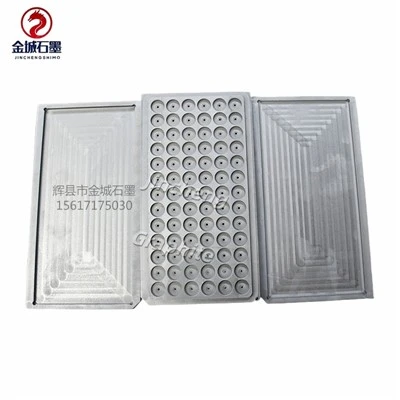
At the end of the day, we’re not just a supplier—we’re people who’ve spent years working with carbon fiber, answering these exact questions, and helping customers pick the right material for their specific needs. If you’ve got a project where you’re wondering if carbon fiber plates will work for your heat or fire-related requirements, or if you’re ready to order a custom plate for your prototype or production run, don’t hesitate to reach out. We’ll walk you through the options, answer any other questions you have, and help you get the right parts delivered on time.
Carbon Fiber Composite Plate References
- Mouritz, A.P., Mathys, Z., & Gibson, A.G. (2001). Fire properties of carbon fibre polymer composites. Composites Science and Technology, 61(12), 1705-1717.
- UL 94 Standard for Tests for Flammability of Plastic Materials for Parts in Devices and Appliances. Underwriters Laboratories Inc.
- Shenoi, R.A., & Hawkins, S.C. (1993). High-performance carbon fibre composites for high-temperature applications. Composites Engineering, 3(10), 965-980.
- Gibson, R.F. (2010). A Review of Recent Research on Carbon Fiber Reinforced Polymer Composites for High-Temperature Applications. Journal of Composite Materials, 44(23), 2725-2758.
Huixian Jincheng Abrasive Mold Factory
As one of the most professional carbon fiber composite plate manufacturers and suppliers in China, we have world-leading production equipment and strong manufacturing capabilities. Please rest assured to buy durable carbon fiber composite plate for sale here from our factory. Quality products and reasonable price are available.
Address: Mengzhuang Town, Huixian City, Henan Province
E-mail: graphite.jc@gmail.com
WebSite: https://www.graphite-jc.com/
