As an adult underpad supplier, I get this question all the time from caregivers, facility managers, and even the people using our products directly: “Can I use multiple adult underpads at once?” It’s not a yes-or-no answer—this is a topic that deserves to break down the practical, health, and business sides of what actually works, what creates problems, and how to make the call that’s right for your situation. I’ve been in this industry for 12 years, talking to hundreds of clients every week, and I can tell you this isn’t a cut-and-dry debate. Let’s walk through the facts. Adult Underpad
First, let’s clarify what an adult underpad (often called a bed pad, chux, or incontinence pad) is for, because that’s the foundation of whether multiple make sense. Designed to protect mattresses, furniture, and clothing from urine, feces, perspiration, or minor bodily fluid leaks, these pads rely on two key components: a top sheet that pulls moisture away from the skin, an absorbent core that locks fluid in, and a waterproof backing that prevents seepage to the surface below. Single underpads are usually sized 24×36 inches for beds, 30×36 for heavier flow, or smaller 17×24 for chairs.
Now, when would someone even consider piling two or more on top of each other? The most common scenario is managing heavy, unpredictable leaks. For example, a caregiver might be tending to someone with severe incontinence—say, a post-surgery patient recovering from pelvic surgery, or someone with advanced dementia who has no control over their bladder or bowels. A single heavy-duty pad might hold 30-40 ounces of fluid, but if that person has a larger volume accident (like a bowel movement that’s more than 80 ounces, or a urinary accident that hits 50+ ounces), a single pad can overflow, seep through to the mattress, or leave moisture against the skin. Other times, people might use multiple pads for extra protection when traveling, or for procedures like long hospital stays where changing a sheet is hard, or for people who sweat heavily at night due to fever, menopause, or medication.
But here’s where the conversation gets tricky: while multiple underpads can seem like a simple fix, there are major caveats that many caregivers don’t realize. Let’s start with skin health, because that’s the biggest risk for users. When you stack two pads, the top pad’s waterproof backing doesn’t breathe, right? So any moisture that gets through the top pad doesn’t evaporate—it gets trapped between the two pads, sitting directly against the user’s skin. I’ve talked to a nurse who worked in a long-term care facility that saw a 30% spike in stage 1 pressure injuries in patients who had multiple underpads used for extended periods. That’s because constant dampness softens the skin, breaks down its natural barrier, and creates the perfect environment for bacteria and fungi to grow.
Then there’s the fit and comfort factor. Two pads add bulk that isn’t necessary. For someone who’s already immobile or spends most of their time in bed, that extra thickness can cause pressure points on the hips, tailbone, and heels. If someone is using pads on a wheelchair, stacking two makes sitting uncomfortable, increases the risk of the pad shifting, and can even throw off a person’s balance if they’re partially weight-bearing. I once had a client who runs an adult day care tell me she stopped allowing staff to use multiple pads because half her clients were complaining of back aches and numb legs after sitting all day with stacked pads.
Another issue is effectiveness, not just for the user, but for the caregiver. When you use two pads, the top pad often shifts around, so instead of the fluid being contained in one concentrated area, it spreads across both pads, meaning it takes longer to absorb—and longer to clean or change. That’s not just a hassle; it can also lead to more leaks because the pooled moisture hasn’t been locked away properly. A lot of caregivers think “more absorbent material = better protection,” but that’s not how these pads are engineered. Each pad’s core is calibrated to lock fluid in, and stacking two can actually overwhelm the core’s ability to process fluid quickly, because the top pad’s top sheet can’t pull moisture down to the second pad’s core fast enough.
Wait, but let’s not dismiss all cases where multiple pads do work. There are specific, short-term scenarios where stacking is the right call, as long as you do it correctly. For example, a user who only experiences extremely heavy, rare leaks—like a post-partum patient with severe urinary incontinence who only has major accidents 1-2 times a week—might use a single heavy-duty pad, and add a thin, breathable underpad on top to catch minor drips in between full leaks, for one night at a time. The key here is that it’s short-term, and you change the pads as soon as they get damp, not leave them on for 8+ hours. Another scenario is overnight care for someone who has occasional bowel incontinence and normal urinary flow—using a waterproof sheet liner under the bed pad, plus one high-absorbency pad on top, can add protection without the bulk of two standard pads. We also have clients who work with hospice patients who request the extra layer for peace of mind during end-of-life care, as long as nurses check on the patient every 2 hours to reposition and change pads.
The big mistake I see is when people use multiple underpads as a long-term solution for regular incontinence, rather than addressing the root of the problem. That’s why at our company, we always recommend exploring alternatives before committing to stacking. For example, if you’re dealing with heavy urinary incontinence, upgrading to a super-absorbent underpad that holds 60+ ounces, paired with a moisture-barrier cream for the skin, is far more effective and safer than two standard pads. For bowel incontinence, some of our clients use a bed pad with a reinforced core specifically designed for solid waste leaks, which doesn’t require a second layer. There are also products like protective mattress covers with built-in absorbency, which are thicker than a standard underpad but breathe better than two stacked pads, because they’re engineered with a breathable membrane that allows air flow while blocking fluid.
Another point to consider is product type, because not all underpads are created equal. Disposable underpads (the most common type used in homes and facilities) are different from reusable fabric underpads, and stacking works very differently for each. Reusable fabric pads are made of cotton or microfiber, and they actually breathe more than disposables—so stacking two reusable pads for a short period, like during a sick day with a fever, is much safer than stacking disposables. That’s a key distinction I always make: if you’re using reusable underpads, the risk of skin irritation is lower because fabric allows some air circulation, whereas disposable underpads’ plastic backings don’t, even when stacked lightly.
I also want to touch on cost, because that’s a practical factor for families and care facilities. Stacking two disposable underpads means you’re using twice the product for each leak episode, which adds up quickly. A single heavy-duty underpad that costs $1 might be more expensive per unit than a standard $0.25 pad, but if it works as well as two standard pads, you’re saving 50% on product costs over time. For a long-term care facility with 100 residents, that’s thousands of dollars a year in savings, not to mention reducing the risk of costly pressure injury treatments, which can run into hundreds of dollars per patient per episode.
Let’s go back to the example I had earlier with the nurse who noticed pressure injuries from stacked pads. That facility switched to a combination of ultra-absorbent single pads and reusable waterproof mattress liners, and within six months, their pressure injury rate from pad-related issues dropped by 75%. That’s the kind of outcome that matters more than just piling on more product.
But what if you’re in a pinch, and you can’t get a heavier pad right now? Maybe you’re staying at a hotel and only have one standard underpad, or you’re caring for someone at home and ran out of heavy-duty pads. In that case, using two pads is a temporary fix, not a long-term solution. Here’s how to do it safely, if you have to: first, make sure the two pads are the same size, and lay them flat so there’s no overlap at the edges (overlapping edges create gaps where fluid can seep through). Place the waterproof backing of the top pad facing up? No, wait—no, the top pad’s top sheet should face the user, and its waterproof backing should face down, onto the bottom pad’s top sheet. So you have user skin → top pad’s absorbent core → top pad’s waterproof backing → bottom pad’s absorbent core → bottom pad’s waterproof backing → mattress. That way, moisture moves down through both cores, as opposed to sitting between two waterproof layers. And change the pads every 2-3 hours if they get damp, or immediately after an accident—don’t leave them on all night. That’s the only safe way to use multiple pads temporarily.
I also want to address a common myth: some people think using multiple pads is only for people with severe incontinence, but that’s not true. Some people use them for post-surgery recovery, like after hip replacement, where they might have limited mobility and can’t change pads easily for a few days. But again, that’s a short-term situation, and as mobility improves, they switch back to a single pad.
At the end of the day, the answer to “Can I use multiple adult underpads at once?” is: only in specific, short-term scenarios, done safely, with a focus on user comfort and skin health, and as a temporary solution, not a permanent fix. The biggest takeaway for anyone dealing with incontinence protection is to match the product to the need, not just add more layers. Our team works with families and care facilities every day to assess individual needs—whether that’s a 24×36 inch standard pad, a super-absorbent heavy-duty pad, a reusable mattress liner, or a combination that fits their situation.
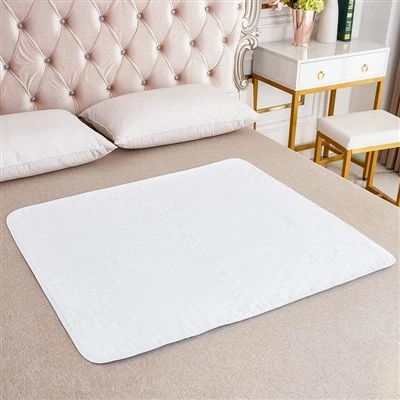
If you’re struggling with leaks, worried about skin irritation, or not sure what product is right for you or your loved one, we’re here to help. We don’t just sell underpads—we advise on how to use them safely and effectively, whether that’s answering questions about multiple pad use, recommending products for specific needs, or sharing best practices for care. Don’t hesitate to reach out to our team to discuss your requirements, and we can help you find a solution that works for you.
Pet Pee Pad References
- National Pressure Injury Advisory Panel (NPIAP). (2023). Clinical Practice Guideline for the Prevention and Treatment of Pressure Injuries.
- American Geriatrics Society (AGS). (2022). Incontinence Management in Older Adults: A Clinical Guide.
- Wound, Ostomy, Continence Nurses Society (WOCN). (2021). Best Practice Guidelines for Incontinence Protection Products.
- Agency for Healthcare Research and Quality (AHRQ). (2020). Pressure Injury Prevention in Long-Term Care Facilities: Evidence Update.
Jiangsu Etang Household Products Co., Ltd.
We are one of the most professional adult underpad manufacturers and suppliers in China. With abundant experience, we warmly welcome you to buy bulk premium adult underpad made in China here from our factory. All customized products are with high quality and competitive price. Contact us for pricelist.
Address: No. 18 Nanhai Road, Siyang Economic Development Zone, Siyang County, Suqian City, Jiangsu Province
E-mail: etang216@js-et.com
WebSite: https://www.etangbedding.com/
