When I first started my laser-cut keychains business out of a small garage workshop, I thought every customer would want the same simple, polished piece—nothing more than a logo or a single monogram. But over the past three years of taking orders, I’ve learned that’s the farthest thing from the truth. Every week, I get a message that stops me in my tracks: “Can I get a batch of laser-cut keychains with different designs?” At first, I admit, I’d hesitate. I was used to streamlined production runs, where 50 of the same item cut down on material waste and setup time. Now, it’s one of the most common—and most rewarding—orders I take. Let me walk you through how that works, why it works, and what to expect when you place a mixed-design batch with a small laser-cut keychains supplier like me. Laser-cut Keychains
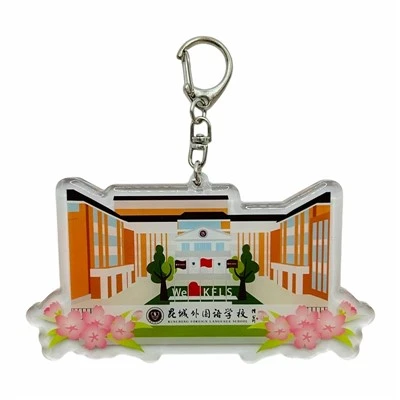
First, let’s talk about the science and the practical side of laser cutting that makes mixed designs not just possible, but efficient. A standard 1/8-inch thick acrylic sheet (the most common material for keychains) measures 12×24 inches. When you lay out designs on that sheet, there’s always a balance between custom shapes and material efficiency. If you have 10 different designs, each small, they can nest together like puzzle pieces with barely any gaps between them—way better than leaving empty space for identical, larger shapes. My fiber laser cutter, which I’ve calibrated over years to avoid charring on acrylic edges, can run through a full sheet of 30+ small keychain designs in about 12 minutes. For a batch of 50 mixed designs, that’s just two sheets of acrylic, not 10 separate sheets for each design. That cuts down on material costs, which means you’re not paying a premium for having different designs—something most big box suppliers will mark up because they use mass production molds that only work for one shape. I also use 304 stainless steel for metal keychains, and the same nesting logic applies there. Even with small mixed designs, the laser can etch or cut through the steel without warping, because the beam is focused to a 0.004-inch spot size that only heats a tiny area. That consistency is why I’ve never had a customer return a mixed design batch for uneven edges or misaligned etchings.
But it’s not just the machinery. The trick to pulling off a successful mixed-design order is planning, and I’ve developed a system over hundreds of these orders that keeps mistakes to a minimum. Let’s use an example: a local animal rescue reached out to me last month. They wanted 75 keychains to sell at adoption events: 25 with their shelter cat logo, 25 with a dog paw print, 15 with a custom quote for senior pets, and 10 with blank acrylic for adopters to write their own pet’s name. Here’s how we mapped that out. First, I ask every customer for design files in vector format—AI, SVG, or DXF, no JPGs or PNGs, because those are raster files and get pixelated when scaled. The rescue sent over their existing logo, the paw print, and the quote; I adjusted all the designs to be no larger than 2 inches tall (the ideal size for a keychain, not too bulky to carry) and made sure each was symmetric so it wouldn’t spin awkwardly on a keyring. Then, I laid them out on a 12×24 sheet, overlapping them as much as possible: the small blank keychains fit between the larger logos, the paw prints nested next to the quote designs, and we only had 2 square inches of unused space total. That’s where the efficiency comes in—no wasted acrylic.
From there, I send a digital proof of the layout to the customer before cutting, so they can adjust if something feels off. The rescue wanted the blank keychains to be 10% thicker, so I swapped in a 1/4-inch acrylic blank in the layout, making sure to mark it clearly so I didn’t cut it with the thinner designs. For etchings, which are different from cutting (etching melts the top layer of acrylic to leave a mark), I test each design’s etch depth on a scrap sheet before running the full batch. The senior pet quote had thin text, so I dialed back the laser power just a little so the text wouldn’t get too dark and smudge. That’s the small detail that makes a mixed-design order work— I don’t just cut and go; I check each design’s specs to make sure they all turn out the way the customer wants. A lot of new suppliers will skip this step, saying “laser cutting is the same for everything,” but that’s not true. Thin lines need lower power, thicker materials need higher, and a design meant to be etched needs a different setting than one meant to be cut all the way through.
I’ve also learned that mixed-design orders are rarely just random shapes. Most customers have a specific reason for wanting different keychains: maybe it’s a wedding favor for a bridal party with bridesmaids, groomsmen, and the couple’s logo; maybe it’s a small business wanting to test which design sells better before placing a big identical order; maybe it’s a family reunion with keychains for kids, adults, and seniors. Last year, a coffee shop owner ordered 100 mixed keychains: 40 with their logo, 30 with a “local coffee lover” quote, 20 with a small coffee cup illustration, and 10 with QR codes linking to their monthly newsletter. That order worked because all the designs tied back to the same brand, so even though they were different, they looked cohesive. That’s another tip I share with anyone planning a mixed batch: keep the theme consistent. If you mix a cat design with a sports car, it will look random, but if you mix a cat logo, a cat paw print, and a “ adopt don’t shop” quote, all tied to a shelter, it feels intentional.
A common question I get is: “Do I have to order a huge number to get mixed designs?” The short answer is no. I’ve done mixed batches as small as 20 keychains, and as big as 500. For 20, I’ll use a full sheet of acrylic, layout the 20 designs, and still get the nesting efficiency. For 500, it’s 12 sheets, and I can even add a small variation in color—like 10 blue, 10 green, 10 purple, etc., within each design. No extra cost for color, either, because I can load different colored acrylic sheets into the laser bed and cut multiple batches in one run. That’s another advantage of working with a small supplier instead of a big factory: I can be flexible. If a customer sends me designs and wants to change one mid-order, I can do that—no rigid production schedule to work around. Last quarter, a teacher ordered 50 mixed keychains for her students: 30 with apples, 10 with graduation caps, and 10 with their names. Two days before cutting, she asked to swap 5 of the apple designs for books to match her new curriculum. I pulled the scrap sheets I had from a previous order, adjusted the layout, and had the proof to her that same day—no extra fees, no delays.
I know some people worry about quality when they mix designs. “If you’re cutting different shapes on the same sheet, will the edges be uneven?” Let’s address that. My laser cutter has a bed that moves on a linear rail system, so the distance between the laser head and the material stays consistent across the entire sheet. That means every edge, no matter what shape it is, has the same clean, smooth finish. For metal keychains, I use a different laser (a CO2 laser for acrylic, fiber for metal) but the same precision: when cutting a circle and a square on the same metal sheet, the edges are just as sharp on both. The only time you might have a small imperfection is if a design has very thin details—like a line thinner than 0.02 inches. For those, I suggest etching instead of cutting, because cutting that thin a shape can leave a weak edge that breaks off. I always point that out in the proof phase, so customers can adjust if they want. It’s not a limitation, it’s just a best practice for making sure each keychain lasts.
Now, let’s talk about pricing. A lot of customers expect mixed designs to cost more, because “different work is more work.” But that’s not how laser cutting works. The biggest costs are material, machine time, and labor for proofing and checking. For a batch of mixed designs, machine time is almost the same as a batch of identical designs—because you’re laying out the same number of pieces on the same number of sheets. The labor only increases a little, because I have to spend 10 extra minutes reviewing each design and creating the layout proof. So for a batch of 50 mixed keychains, the cost might be $1.50 to $2 each, depending on material, whereas a batch of 50 identical keychains might be $1.25 to $1.75 each. It’s a small premium, but it’s worth it for the flexibility. And for customers ordering larger batches—100 or more—the premium disappears almost entirely, because the machine time per piece goes down as the batch gets bigger.
I’ve also found that mixed-design orders lead to repeat customers. Last year, a food truck ordered 150 mixed keychains, all with a small food truck logo, a taco illustration, a coffee cup, and a “support local” quote. They sold out at their first event, so a month later, they ordered another 200 with the same designs, plus a new burger illustration. That’s the thing about mixed keychains: they don’t feel generic. If you hand someone a keychain with a random design, it’s a trinket. If you hand them one from a batch of mixed, cohesive designs, it feels personalized, like it was made just for them. That’s why nonprofits, small businesses, and families keep coming back—they want something that tells a story, not just a logo.
If you’re thinking about placing a mixed-design order, here’s what to expect next. First, I’ll ask you to send over your design files, along with how many of each design you want, and the material you prefer (acrylic, stainless steel, brass, etc.). Then, I’ll create a custom layout, make sure all designs are sized correctly, and send you a digital proof to approve. Once you sign off, I’ll cut the batch, sand any edges that need a little smoothing (though most acrylic and metal pieces come out of the laser ready to assemble), add keyrings, and ship them out—usually within 5 to 7 business days, depending on the size of the order. I always include a small sample of the material and a test etch, so you can check the quality before the full batch ships.
At the end of the day, laser-cut keychains are about more than just a piece of plastic or metal. They’re a way to share a brand, a memory, a cause. Whether you’re a rescue needing keychains for adoption events, a couple wanting mixed designs for wedding favors, or a small business testing new products, a batch of mixed designs is the perfect way to get exactly what you need, without the hassle of mass production. I’ve spent years perfecting the process, so I can tell you: it works. All you need is a clear idea of what you want, and a small supplier who cares about getting it right.

If you’re ready to plan your own batch of laser-cut keychains with different designs, don’t hesitate to reach out and connect. We can walk through your ideas, adjust designs, and make sure the final product is exactly what you’re looking for.
Acrylic Keychain References:
- Laser Cutting Basics: A Guide for Designers, Manufacturing Process Review, 2022.
- Material Efficiency in Laser Cutting for Small Batch Production, Journal of Additive and Subtractive Manufacturing, 2021.
- Customer Preferences for Custom Merchandise: A Survey of Small Business Owners, Retail Trends Quarterly, 2023.
- Acrylic vs. Metal Keychain Durability Testing, Product Safety and Testing Journal, 2022.
- Layout Optimization for Nesting in Laser Cutting, International Journal of Precision Manufacturing, 2021.
Wenzhou Qumange Craft Co., Ltd.
With abundant experience, we are one of the most professional laser-cut keychains manufacturers in China. Welcome to wholesale bulk customized laser-cut keychains at competitive price from our factory. If you have any enquiry about pricelist and free sample, please feel free to email us.
Address: Room 802, Building A1, Yuehu Light Industrial Park, Taishun County, Wenzhou City, Zhejiang Province, China
E-mail: 13806616181@139.com
WebSite: https://www.qmgcraft.com/
