If you’ve worked in industrial process control, you know that downtime isn’t just an inconvenience—it’s a profit killer, a safety risk, and a source of frustration for teams that rely on consistent, reliable operations. As a supplier of HJS OPS-C systems, I field at least a handful of calls every week from plant managers, cybersecurity leads, and operations directors asking the same question: “What actually makes your OPS-C platform different from every other process control system on the market?” Most competitors will lead with shiny new features or scalability, but when it comes to keeping people safe, assets intact, and data out of the wrong hands, HJS OPS-C’s security features are built into the core of the system, not tacked on as an afterthought. Over the past 12 years I’ve worked with process facilities ranging from chemical manufacturing plants to food and beverage processing lines, I’ve seen how those built-in security layers make the difference between a small hiccup and a catastrophic failure, and I want to break down exactly what makes that happen. HJS OPS-C
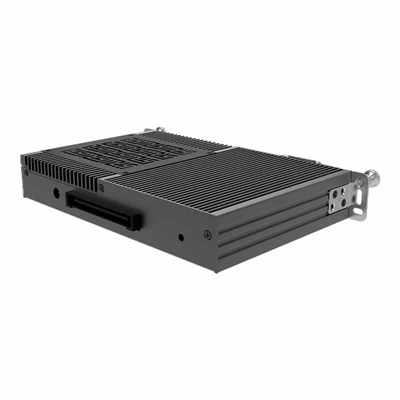
Let’s start with the foundation: zero-trust architecture, not the outdated perimeter-based security model that most legacy control systems still use. For decades, process control teams operated under the idea that if a device was inside the plant network, it was safe. That model died with the rise of ransomware attacks that target industrial networks, when attackers sneak in via a single compromised laptop or phishing email and move laterally across the entire control system before anyone notices. HJS OPS-C flips that on its head. Every single component—from the field sensors that track pressure and temperature to the operator workstations that run the control logic to the cloud-based monitoring modules—authenticates every single interaction before any data is shared. That means even if an attacker gets a foothold in your network, they can’t talk to a field device or access control logic without a valid, time-stamped credential unique to that session. We don’t use generic usernames and shared passwords here either; every operator gets a role-based credential tied directly to their physical token and biometric verification for high-privilege actions, so there’s no more “John from accounting using his manager’s login to adjust valve settings” when he’s supposed to be reconciling raw material costs.
Next, let’s talk about data integrity—something that’s non-negotiable when you’re controlling hazardous processes. If a sensor reading gets altered or a control logic line is modified without a trail, you don’t just lose data; you can have a process run amok. HJS OPS-C uses end-to-end hashing for every single data packet, no matter if it’s traveling 10 feet between a local sensor and the OPS-C controller or 1000 miles to a remote monitoring dashboard. That hash is like a digital fingerprint: if even one bit of data changes in transit, the system flags it immediately and logs the exact time, source, and destination of the modification. We also have immutable audit logging built into every part of the system. These logs aren’t stored on a single server that could be wiped or compromised; they’re replicated across three separate, air-gapped nodes on the plant network, so once an action is logged, it can’t be edited or deleted. I had a customer at a chemical plant in Texas a couple of years ago that got hit by a small ransomware strain that targeted local server logs. The attackers tried to delete a log entry showing that a shift operator adjusted a safety valve, but because our logs were on air-gapped nodes, the plant safety team was able to pull the original log in 90 seconds, prove that the adjustment was valid, and avoid a 12-hour shutdown that would’ve cost them over $2 million in lost production. That’s the kind of real-world impact these features have, and it’s not something you get with a control system that treats logging as an optional add-on.
Speaking of safety-related actions, HJS OPS-C has what we call “safety action segmentation,” which is a feature most people don’t even know they need until they need it. Let’s say you have a control system that runs 50 different process loops: mixing, heating, packaging, waste processing. Most systems let any operator with access to any one loop adjust parameters for every loop. If an operator makes a mistake with a minor packaging loop, that’s one thing. If that same operator accidentally adjusts a high-temperature heating loop that’s part of a hazardous material process, that’s a completely different story. With HJS OPS-C, we segment safety-related control actions into their own, isolated network layer. Only users with specific, dedicated safety operator credentials can access those safety loops, and even then, any adjustment over a pre-set threshold (like increasing a reaction temperature by more than 5 degrees) requires a second approval from a separate operator. There’s no cross-over between non-safety and safety control domains, which eliminates the risk of human error leading to a major incident. I’ve seen another customer, a pharmaceutical manufacturer in Germany, use this feature when a new operator accidentally tried to adjust a cooling loop for a batch of vaccine material. The system blocked the action, required a second approval from the senior shift supervisor, and logged the whole interaction—no harm done to the batch, and no disruption to production.
Cybersecurity isn’t just about keeping attackers out; it’s about keeping internal teams in control too, especially when you connect process systems to cloud platforms for remote monitoring or data analysis. A lot of modern control systems offer cloud integration, but they use a permanent, open tunnel between the plant network and the cloud, which is a huge security risk. HJS OPS-C uses ephemeral connections for all remote access. That means every time a technician logs in remotely to troubleshoot, a unique, encrypted connection is created for that single session, and it’s terminated immediately when the session ends. There’s no persistent open door for attackers to exploit. We also have granular session controls: the plant manager can set exactly what a remote technician can do during their session—like only allow them to view sensor data, not edit control logic—and every click, every action is logged in real time. Last year, I worked with a food processing plant in Iowa that had a production line issue and needed a remote technician from our support team to access their OPS-C system at 2 a.m. The session was created with a 4-hour time limit, restricted to only viewing data for the faulty line, and once the technician fixed the issue and logged out, the connection was gone. No leftover backdoor, no risk of that session being exploited later. That’s the kind of control that gives plant IT teams peace of mind, because they don’t have to choose between remote support and cybersecurity.
Another often-overlooked security feature is the system’s ability to run firmware and logic updates without downtime, and without exposing the network. Legacy control systems often require you to take a loop or even the entire plant offline to update firmware, and during that window, you’re vulnerable. HJS OPS-C uses a parallel update architecture: you can upload a new firmware version to a redundant controller, test the update in a isolated environment within the controller, and then switch over to the updated controller while the other one keeps running the process. That means zero downtime for the plant, and the update process is done entirely within the secure network—no need to connect to external servers or open up your network to third-party tools for testing. I can’t tell you how many customers have told me that this single feature has saved them tens of thousands of dollars in unplanned downtime, not to mention eliminated the security risk of exposing their network during updates.
Let’s get real for a second: no system is 100% immune to threats. Even the most secure systems have vulnerabilities, and when that happens, response time is everything. That’s why HJS OPS-C has built-in anomaly detection tailored specifically to process control systems, not the generic intrusion detection tools made for office networks. Generic IDS tools flag any unusual traffic, which leads to hundreds of false alarms a day for process teams who can’t afford to get a false alarm and shut down a process unnecessarily. Our anomaly detection is trained on normal process behavior: it knows that a pressure spike of 2 PSI is normal during a material transfer, but a spike of 20 PSI that happens when no transfer is scheduled is suspicious. It flags those true anomalies within seconds, and sends the alert directly to the operator’s workstation, the plant’s IT team, and our 24/7 security operations center (SOC) that specializes in industrial control systems. Our SOC doesn’t just send a generic alert like “unusual network activity”; they work with the plant team to investigate in real time, so if there is a threat, we can mitigate it before it causes any damage. We’ve had instances where our SOC caught a brute-force attack on an OPS-C controller before the operator even saw the alert, and we were able to block the attack remotely without any disruption to production.
Now, I know what some of you are thinking: “All this security must mean the system is complicated to set up and use, right?” That’s a fair concern, and we built HJS OPS-C’s security features to be transparent and usable for process operators, not just IT experts. We don’t require operators to memorize 15 different passwords or go through 10 steps to do their job. The security layers work in the background, so operators can focus on keeping the process running, not on managing security tools. The audit logs and access controls are all built into the familiar operator interface, so a shift supervisor can review who did what in two clicks, no special training required.
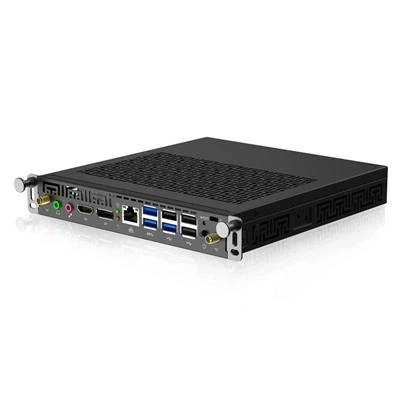
At the end of the day, every security feature in HJS OPS-C is designed for one core purpose: to keep your process safe, your data secure, and your operations running smoothly without sacrificing performance. If you’re tired of process control systems that treat security like a box to check at implementation time, or if you’ve dealt with the headache of ransomware, human error, or unplanned downtime that could’ve been prevented, I’d encourage you to reach out to our team to learn more about how HJS OPS-C can work for your facility. We work with facilities of all sizes, from small regional plants to large multinational operations, and we tailor our security features to your specific needs, not a one-size-fits-all solution. Whether you’re upgrading an old control system for the first time or looking to add better security to your existing process infrastructure, our team is here to walk you through every detail, answer your questions, and help you make a decision that keeps your people, assets, and bottom line protected.
HJS OPS References
International Society of Automation (ISA). (2021). Security Standards for Industrial Automation and Control Systems (ISA-62443).
National Institute of Standards and Technology (NIST). (2020). Zero Trust Architecture (NIST SP 800-207).
Honeywell Process Solutions. (2022). Industrial Cybersecurity Trends in Process Control.
European Agency for Cybersecurity (ENISA). (2023). Ransomware Threats to Industrial Control Systems.
Shenzhen HJS Technology Group
Shenzhen HJS Technology Group is one of the most experienced hjs ops-c manufacturers and suppliers in China, featured by quality products and good service. Please rest assured to buy CE approved hjs ops-c made in China here from our factory. For price consultation, contact us.
Address: F10, Wanhe Technology Building C, No. 7 HuiTong Road, Fenghuang Street, Guangming New District, Shenzhen. China.
E-mail: info@hjs-pc.com
WebSite: https://www.hjs-pc.com/
