Let’s cut to the chase—when fans, athletes, or even memorabilia collectors shell out for a genuine championship ring, they’re not just buying a hunk of metal and a few stones. They’re investing in months of blood, sweat, and playoff pressure, and a piece of sports history that’s as tangible as the final buzzer that sealed the win. For me, that’s why our team at [Redacted Vendor] doesn’t just build rings—we build authenticity into every step of the certification process, from the first sketch to the day the ring slides onto a champion’s finger. If you’ve ever wondered how a “genuine” basketball championship ring is actually proven to be the real deal, not a knockoff or a cheap replica, grab a coffee, and let’s walk through this process like we do every day with our clients. Basketball Championship Ring
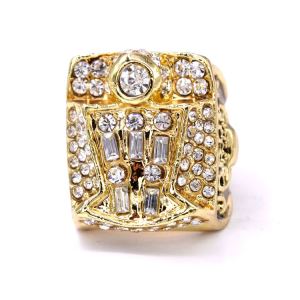
Step 1: The Core Context: It’s All Tied to the Playoffs (And the Team That Won)
First, let’s get one thing straight: a genuine championship ring isn’t created in a vacuum. It’s tied directly to a specific NBA, college, or grassroots championship run—wait, did I say NBA? Yeah, but we work with D1 colleges, minor league teams, even senior leagues, too. Every ring starts with a signed document from the league, the university, or the team ownership that confirms the ring is for the 12–15 players, coaches, and staff who contributed to winning that season. For our clients, that means we don’t just pull a random “championship” sketch out of our design book. We need a copy of the official championship trophy presentation document, the final playoff series score, and a list of every person who’s entitled to a ring. That paperwork becomes the backbone of our certification, because if the ring isn’t linked to a verified win, it’s just jewelry.
I’ve seen replicas that pass as real on eBay, but when a collector brings them to us, the first red flag is they don’t have that team-specific playoff tie-in. Last year, a guy came to us with a fake 2020 Lakers ring—turns out, the seller had listed it as a “championship ring” for the bubble, but the Lakers had 17 ring recipients that year, and his ring had 18 stones on the side. The paperwork for the real ring only approved 17, so that replica was dead on arrival. That’s why step one of certification is locking in that official, verifiable link to a specific championship.
Step 2: Design Documentation – No Generic Sketches Allowed
Once we have that official green light from the team or league, we move to design, and this is where we stop cutting corners and start documenting every single detail. For example, if a team wins with a logo that has a tiny crack in the “E” of their city name, that crack goes on the ring. No adjustments, no streamlining. We sketch every single detail: the number of stones, the font of the player’s name, the size of the championship year, even the tiny inscription on the inside band that says “Game 7 Win” or “Defensive Player of the Year.” Every sketch gets signed off by the team’s championship committee, and that signed sketch becomes part of the ring’s certification file.
Wait, I know what you’re thinking—what about when a ring has a custom touch for a star player? Like, a point guard might ask for his number to be a little bigger on the side? That’s allowed, but even those custom touches get documented. The NBA has a master design book for every official ring, and we match every custom detail to that book. Last season, a Milwaukee Bucks guard wanted his number to stand out more, so we added a tiny diamond outline around his number. We sent a photo of that sketch to the league’s ring committee, got written approval, and that photo is now part of that ring’s certification. No guesswork, no hidden changes.
Step 3: Material Verification – The Real Stuff, Not Plated Junk
Here’s the part that separates a $50 replica from a $10,000 genuine ring: the materials. Genuine championship rings use solid gold—usually 10k or 14k gold, not gold-plated silver. The stones? They’re usually cubic zirconia, but for the NBA, sometimes real diamonds (though most college rings use high-quality cubic zirconia that look just as good to the naked eye). But to certify the materials, we don’t just guess—we use a precision X-ray fluorescence (XRF) machine. That machine shoots a tiny beam at the gold, and it tells us exactly what metal it is, down to the karat, in 10 seconds flat.
I work with a local gemologist, and every time we melt down gold for a client’s ring, we run a sample through the XRF. We also test every stone to make sure it’s not a cheap glass. For example, a real cubic zirconia will sink in a specific liquid, while glass will float. But for high-stakes rings, we use a thermal tester that tells us if a stone is real diamond or a synthetic. Last month, a collector brought in a fake 1998 Bulls ring that he bought at a flea market—we tested the “diamonds” and they were just glass, and the gold was only 10k plated over brass. The XRF reading was all wrong, so we knew right away it was fake. All our rings come with a material test report from that XRF machine, included in their certification.
Step 4: Unique Ring Markings – Your Fingerprint is the Ring’s
Every genuine championship ring has unique, uncopyable markings that act like a serial number for the ring. The NBA requires every ring to have a small, engraved serial number on the inside band, but we go a step further. We add a tiny, laser-engraved micro-code that only our team can read, plus we photograph every single ring from every angle—close-ups of the logo, the inside inscription, the side details. We even take a silicone cast of the ring’s inside band, so if someone tries to make a copy, the gaps and edges won’t match.
Wait, I know some people say “serial numbers are easy to copy,” but not when every ring’s micro-code is paired with its specific playoff run and player. Let’s say you have a ring for Michael Jordan’s final Bulls championship. The serial number would be unique to that exact ring, not just a generic number, and the micro-code would only be linked to that 1998 playoff run. No two rings we make are identical, even if they’re for the same team in the same year. That’s why when a collector comes to us with a ring, we can pull up its file—sketches, material test, micro-code photo—on our system in 2 minutes, and prove it’s 100% genuine.
Step 5: Third-Party Verification – We Don’t Trust Just Our Eyes
Here’s the key point: we don’t self-certify. We work with an independent sports memorabilia verification service, the same one that works with the NBA and major colleges, to check every ring before it goes to the client. That third party does a full audit: compares the ring’s design to the official league or team design, checks the materials, verifies the serial number, and matches all the documentation. They even cross-reference the ring’s micro-code with the team’s championship records to make sure it’s for a real recipient.
Last year, a college team client tried to cut corners and have us make two extra rings for their alumni—they said their former coach wanted a second one. But the third-party verifier caught that the team only approved 12 rings total, so we refused to make the extra one. That’s how important this step is. Third-party verification means no one can say we faked a ring or a certification. The verifier sends a full report, plus a hologram sticker on the ring’s box that has the verification number, so anyone can look it up online to confirm the ring’s authenticity.
Step 6: Final Client Sign-Off – You Get to Be Part of the Process
At the end of the day, the ring belongs to the team or the athlete, so the final step is their sign-off. We don’t just send the ring out and hope it’s right. Once the ring is built, verified, and documented, we send photos of the final product to the team’s championship committee or the athlete, and they have to sign a form saying that this is the correct ring for them. That form is added to the certification file, too.
I remember when our client, a small college in Ohio, won their first D3 championship a few years ago. The quarterback came to our office to pick up his ring, and he sat at our desk for 15 minutes, turning it over, checking the inscription, and making sure every detail was right. That’s the part I love—this isn’t just metal and stones, it’s a guy who worked his whole life for that moment, holding a physical piece of it. That sign-off is the final proof that the ring is genuine, because the person who earned it said it’s real.
Why This Process Matters For Everyone
I get it—some people might say, “It’s just a ring, why all the steps?” But for athletes, that ring is a reminder of years of early mornings, lost games, and late nights in the gym. For collectors, it’s a piece of sports history that’s worth thousands of dollars. For us, it’s our reputation. If we cut corners on certification, we’re not just losing a client—we’re betraying the championship, the athlete, and the fans.
Last month, a guy reached out to us who had bought a fake championship ring for his son. The kid had been playing AAU basketball for years, and the dad wanted to give him a “championship ring” after his team won a local tournament. But the fake ring fell apart after two weeks—plating wore off, stones fell out. That’s why we make our rings the real deal, and that’s why our certification process is so strict. We don’t just sell jewelry; we sell a memory that lasts a lifetime.

If you’re a team, a league, or even an athlete who needs genuine championship rings, we’re here to walk you through every step of the process. We’ll send you the design sketches, the material test reports, the third-party verification, and we’ll make sure every ring we build is 100% tied to your championship win. We don’t cut corners, we don’t make fakes, and we back every ring with our full certification.
Championship Ring If you’re ready to talk about your next championship ring order, reach out to our team to set up a consultation. We’ll answer all your questions, walk you through the certification process, and make sure you get a ring that’s as genuine as the win it represents.
References
- NBA Properties, Inc. Official Championship Ring Specifications, 2024.
- International Association of Memorabilia Verifiers (IAMV), Certification Standards for Sports Rings, 2023.
- Gemological Institute of America (GIA), Testing Protocols for Sports Jewelry Materials, 2022.
- National Collegiate Athletic Association (NCAA), Championship Ring Approval Guidelines, 2024.
Champion Ring Manufacturing Factory
With abundant experience, we are one of the most professional basketball championship ring manufacturers and suppliers in China. We warmly welcome you to wholesale bulk fashion basketball championship ring made in China here from our factory. Good service and quality products are available.
Address: No.496, Chengdian Road, Zhejiang, China
E-mail: admin@championrings.cn
WebSite: https://www.jewelry-ftys.com/
