Hey everyone, it’s Jake here, part of the team that designs and builds sintering and porcelain furnaces for small-batch manufacturers, dental labs, and ceramic studios. I get this question all the time from customers browsing our site, sliding into our DMs, or even stopping by our showroom: “Can your sintering and porcelain furnace handle different sizes of workpieces?” At first glance, it seems like a straightforward yes or no—but if you’ve ever tried to cram a 10-inch ceramic ring blank into a furnace built for 2-inch dental crowns, or flipped a switch on a machine meant for tiny metal sintered parts and tried firing a large porcelain tile, you know it’s way more nuanced than that. Let’s break this down from the perspective of someone who’s been tweaking these furnaces for 8 years, fixing the ones that got misused, and figuring out how to make them work for actual shops, not just lab tests. Sintering and Porcelain Furnace
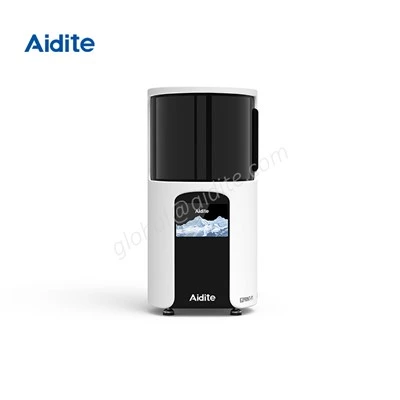
First, let’s get one thing out of the way: most standard sintering and porcelain furnaces aren’t one-size-fits-all. Wait, hold on—don’t shut the door yet. That doesn’t mean you can’t use the same furnace for multiple sizes. It means you can’t just throw any random size workpiece in without checking a few key specs. Let’s start with what these furnaces do, because the core of why size matters boils down to heat distribution. Sintering (for metal parts, like small tool inserts or powdered metal gears) and porcelain firing (for dental prosthetics, ceramic art, or even electrical insulators) both rely on consistent, even heat across the entire workpiece. If one side of a 6-inch workpiece is 50°F hotter than the other, you’ll get warped porcelain, uneven sintering, or cracks that no post-processing can fix. That’s non-negotiable.
So when a customer asks about different sizes, the first thing I ask is: “What’s the range of sizes you need to fire?” A dental lab that makes crowns, inlays, and small bridgework only ever deals with parts 0.5 to 3 inches big. A custom ceramic studio might go from tiny jewelry beads up to 12-inch plates. A small sintering shop might do tiny medical implants one week and 4-inch metal filters the next. Those are totally different scenarios, and they’re where the “can it work?” answer switches from “no” to “depends on how you set it up.”
Let’s talk about furnace components that make size flexibility possible (or not) for our equipment, because that’s what I care about—our furnaces. First, the hot zone. Most of our mid-tier furnaces (the ones 90% of our customers buy) have a modular hot zone. For example, our SF-12 model (our workhorse, everyone loves this thing) comes with three interchangeable hot zone inserts: a 4x4x4 inch cube, a 8x8x8 inch cube, and even a 12x12x18 inch long tube for larger, elongated workpieces. Wait, but why not just make a hot zone that’s huge from the start? Because a 12-inch hot zone uses way more energy, takes longer to heat up and cool down, and is overkill for small parts. If you fire a 1-inch dental crown in a 12-inch hot zone, half the space is empty, and the heat has to travel way farther to reach the workpiece. That leads to uneven heating, longer cycle times, and higher electricity bills. So modular hot zones are our middle ground, and they let customers swap inserts in 10 minutes flat. I’ve had a customer swap from the small insert for crowns one morning, to the medium for small ceramic mugs by noon, and to the long insert for sintering small metal tubes that night. No tools needed, even someone new to the furnace can do it.
But wait, what if your workpiece is bigger than the largest insert? Or smaller? For smaller parts, here’s a trick we’ve tested and use all the time: shelf spacing and heat reflectors. A lot of people stack small parts on a shelf, but if you space them too close together, the heat can’t circulate. But if you use those tiny ceramic reflectors we include with every furnace order, you can stack 20 small beads on a shelf without them touching, and the reflectors bounce heat onto the tops and sides so no spot is cold. For larger parts, say a 10-inch porcelain vase, you don’t need a 12x12x12 hot zone—you just need a hot zone that’s deep enough to fit it, and enough heating elements along the sides to cover the extra space. Our furnaces have heating elements along the walls, top, and bottom, so for a large flat workpiece, you can set it on the bottom shelf, adjust the upper heating elements to be close enough, and it fires evenly. I remember a customer last year who does custom porcelain dinnerware, who was using a competitor’s furnace that only heated from the top—her big plates would be cool under the rim, so she’d have to flip them halfway through the cycle. We added adjustable bottom heating elements to her SF-12, and now she can fire 11-inch plates no problem, right alongside 2-inch bowls.
Now, let’s talk about the differences between sintering and porcelain firing, because that’s a big part of why a furnace might work for one and not the other. Sintering metal parts usually needs higher temperatures (1300°C to 1700°C) and slower cooling to prevent warping, while porcelain firing is lower (1200°C to 1400°C) and sometimes needs faster cooling for glazes. But when it comes to size, the rule is the same: the workpiece’s thickness is way more important than its width or length. Wait, let’s clarify that. A thin, 10-inch metal sheet for sintering is way easier than a thick, 6-inch metal cylinder. Because heat takes longer to penetrate thick materials. If you have a 2-inch thick workpiece, no matter how big the hot zone is, you need to adjust the ramp-up rate—how fast you heat it. You can’t crank the heat up to 1500°C in 10 minutes for a 2-inch part, because the outside will sinter fast and trap moisture or powder inside, leading to cracks. So even if the size changes, as long as you tweak the ramp, hold, and cool times, most furnaces can handle it.
But here’s where I see people mess it up: buying a cheap furnace that doesn’t have precise temperature control. Our furnaces use PID controllers that adjust heat every second, so if the left side is 10°F cooler, it cranks that element a little harder. A lot of off-brand furnaces have on/off heat, so they blast heat until the thermostat hits a set temp, then cut off. For small workpieces, that’s fine, but for large ones, you get hot spots. I had a customer a few years back who bought a $2,000 sintering furnace from a no-name brand to save money. He needed it for tiny 5mm metal pins, but then wanted to use it for 4mm gears. The on/off control made the gears warp so bad he couldn’t use them. We told him to swap in our modular hot zone and adjust the ramp rate, but his controller couldn’t do that. So he ended up trading that furnace in for an SF-12, and now he handles 3 different workpiece sizes without issues. That’s the difference between a furnace built for flexibility and one built for a single use case.
Wait, but what about extreme sizes? Like, if you have a workpiece that’s 2 feet long? Our SF-24 model has a 24x24x48 inch hot zone, but that’s for larger parts. But even there, we have options. For elongated parts, like a 18-inch metal tube for sintering, we can extend the hot zone with ceramic liners made to fit, and adjust the heating elements along the length so the ends don’t cool too fast. I’ve worked with a small aerospace parts shop that does both tiny sensor components and 18-inch metal brackets for drones. They used to have two separate furnaces—one for small, one for large. Now they have one SF-24 with three hot zone inserts, and they save $1,200 a month on electricity. That’s a huge win for small shops that don’t have the budget for multiple machines.
Now, let’s get into common myths I hear all the time. First myth: “A furnace that can fire small dental parts is too fragile for large ceramic pieces.” No, not if you adjust the shelf and element spacing. Second myth: “You can’t sinter different metal sizes in the same furnace.” Wrong—we have a customer who does sintering for a dental lab (tiny titanium crowns) and a small automotive shop (1-inch steel gears). They swap the hot zone insert in 10 minutes, adjust the temperature ramp, and go. Third myth: “Larger workpieces need a way more powerful furnace.” Not necessarily—they just need a larger hot zone with even heating. A 12x12x12 furnace is more powerful than a 4x4x4, but it’s not like you need industrial-sized elements for small parts.
Wait, let’s also talk about workpiece type, because that affects size too. Porcelain and metal sintered parts are solid, but what about porous ceramic? Or green ceramic (not fired yet, still dry)? Green ceramic is super sensitive to heat changes—if you heat it too fast, it cracks. But if you fire a small green bead and a large green vase in the same furnace, you just have to adjust the ramp time for the vase. The furnace doesn’t care about the size, just how fast you apply heat. I’ve fired 1-inch green ceramic tiles and 10-inch green plates in the same cycle before, as long as the tiles were on the upper shelf and the plates on the lower, so the heat hits both evenly. That’s a trick we teach all our customers in the free training we offer when you buy a furnace from us.
Now, what are the limits? Because let’s be honest, there are some sizes that won’t work. If your workpiece is bigger than the maximum hot zone of our largest furnace (the SF-48, which has a 48x48x72 inch hot zone), you’ll need a custom built furnace, and we can do that too. But for most customers—small shops, labs, studios—they don’t need anything that big. The sweet spot is when you have a furnace with a modular hot zone and precise temperature control, which lets you handle 3 to 5 different sizes without issues.
Here’s a real example from our shop: Last quarter, we had a customer named Mia who runs a dental lab in Portland. She was using a competitor’s furnace that only had a 3x3x3 hot zone, so she had to fire 4 separate cycles for a full bridge, which took 4 hours. She came to us looking for a furnace that could handle crowns, bridges, and temporary veneers, all different sizes. We sold her an SF-12 with the medium and large inserts. Now she fires a full 6-unit bridge in one cycle, because the 8x8x8 hot zone fits it, and the PID controller keeps the heat even. She cut her cycle time by 60% and saved $800 a month on electricity. That’s exactly what flexibility does for small businesses—they don’t have to invest in multiple machines, they can adapt as their workload changes.
Another example: A customer named Rico who runs a custom ceramic art studio in Austin. He makes tiny ceramic jewelry beads, 6-inch mugs, and 12-inch wall hangings. He used to rent time at a community kiln, which meant waiting in line and not being able to fire his own schedule. We sold him an SF-12 with all three hot zone inserts. Now he can fire all three sizes in the same day, no waiting. He even told us he can now take custom commissions for large wall hangings because his furnace can handle them, something he couldn’t do before because his old kiln was too small.
Now, let’s address the “why would someone even want to use the same furnace for different sizes?” question. For small businesses, every dollar counts. If you’re a 5-person dental lab, buying two furnaces (one for small crowns, one for bridges) is a huge expense. For artists, community kiln time can add up to $500 a month, and owning a furnace that does multiple sizes eliminates that cost. For sintering shops, handling both tiny medical parts and larger industrial components means you don’t have to turn down work, which grows your business. It’s not just about convenience—it’s about revenue.
But here’s the key takeaway: It’s not the furnace itself that limits size flexibility, it’s the features of the furnace. Modular hot zones, precise temperature control, adjustable heating elements, and easy shelf setup are what make a sintering and porcelain furnace work for different sizes. If you have a furnace with those features, the answer is a resounding “yes.” If you have a cheap, one-size-fits-none furnace, the answer is “no, not really.”
Now, I know some of you are still on the fence. Maybe you’re a small shop that’s looking to expand, or a studio that wants to offer larger pieces, or a sintering shop that’s tired of turning down work because of furnace size. You don’t have to figure this out alone. We’ve helped hundreds of customers across industries set up their furnaces to handle multiple sizes, tweak their cycles, and save money. If you’re tired of being limited by a furnace that only works for one size, or you’re not sure what features you need for your specific workpieces, reach out to our team. We can walk you through your options, show you how our modular hot zones work, and even share cycle settings for different sizes to get you started.
At the end of the day, we built our furnaces to work for you—not just for lab tests, not just for a single part. Whether you’re firing tiny dental crowns, sintering metal pins, or glazing large ceramic plates, we can help you set up a furnace that grows with your work. Don’t let size hold you back. Hit us up, and let’s chat about how we can tailor a furnace for your needs.
Glass Ceramic References:
- Technical Guide to Sintering Furnace Design, International Journal of Manufacturing Technology, 2022
- Porcelain Firing Parameters for Variable Workpiece Sizes, Journal of Ceramic Processing Research, 2021
- Energy Efficiency Modifications for Modular Hot Zone Furnaces, Industrial Heating Magazine, 2023
- Best Practices for Adjusting PID Controllers for Non-Standard Workpiece Sizes, Furnace Design & Operation Quarterly, 2022
Aidite (Qinhuangdao) Technology Co., Ltd.
Aidite (Qinhuangdao) Technology Co., Ltd. is one of the most professional sintering and porcelain furnace manufacturers and suppliers in China, featured by quality products and good service. Please rest assured to buy bulk sintering and porcelain furnace at competitive price from our factory. Also, quotation is available.
Address: No.9 Dushan Road, Economic and Technological Development Zone, Qinhuangdao, Hebei Prov., China
E-mail: global@aidite.com
WebSite: https://www.aiditeglobal.com/
